the table below lists the properties of a metallic element.\nproperty\nshiny\nsilver colored\nforms +1 and…
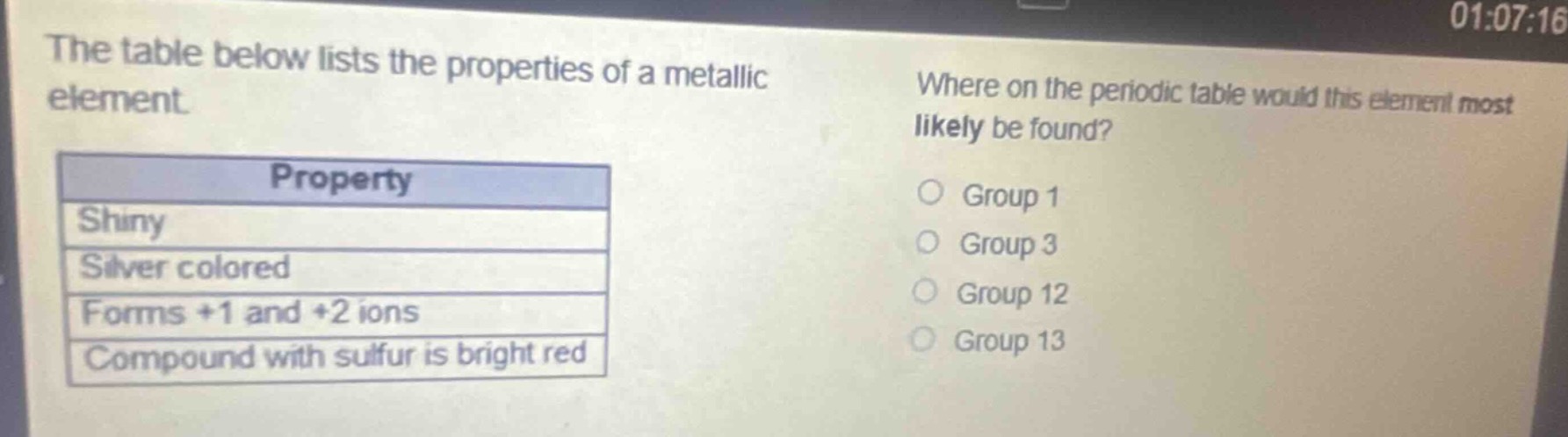
the table below lists the properties of a metallic element.\nproperty\nshiny\nsilver colored\nforms +1 and +2 ions\ncompound with sulfur is bright red\nwhere on the periodic table would this element most likely be found?\ngroup 1\ngroup 3\ngroup 12\ngroup 13
Answer
Answer:
Group 12
Explanation:
Step1: Analyze group - 1 elements
Group 1 elements (alkali metals) usually form + 1 ions only and are soft, highly reactive metals, not typically shiny - silver colored in a pure state for long due to reactivity, so not Group 1.
Step2: Analyze group - 3 elements
Group 3 elements are part of the transition - metal series but their common oxidation states and properties don't match well. They don't commonly form both + 1 and + 2 ions and don't have the described compound property with sulfur, so not Group 3.
Step3: Analyze group - 12 elements
Group 12 elements (zinc, cadmium, mercury) are shiny, silver - colored metals. Zinc and cadmium can form + 1 and + 2 ions. Cadmium sulfide is a bright - red compound, which matches the property in the table, so Group 12 is a likely match.
Step4: Analyze group - 13 elements
Group 13 elements (boron group) typically have an oxidation state of + 3 and do not form + 1 and + 2 ions commonly, and their compounds with sulfur do not match the described property, so not Group 13.