tijuan mixed a solid and a liquid together in a beaker. he determined that a chemical change occurred. if…
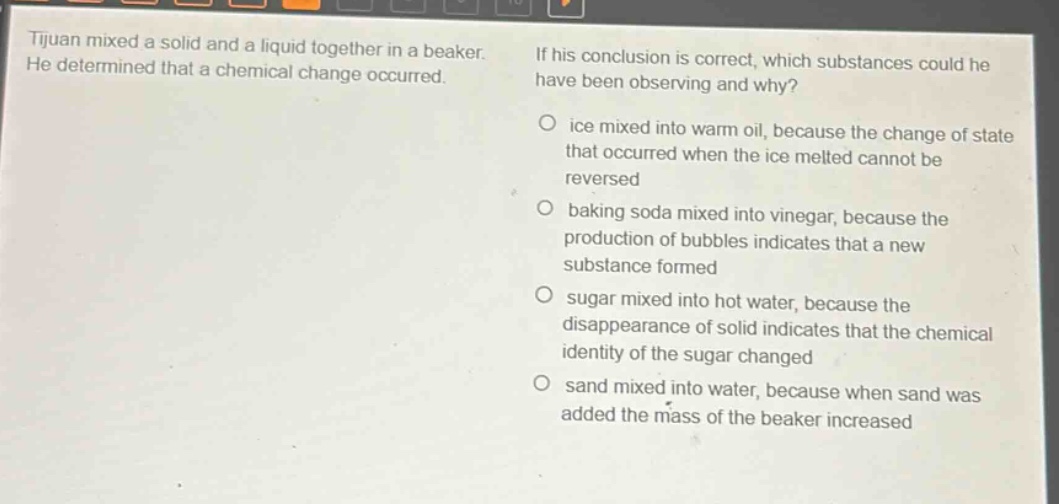
tijuan mixed a solid and a liquid together in a beaker. he determined that a chemical change occurred. if his conclusion is correct, which substances could he have been observing and why? o ice mixed into warm oil, because the change of state that occurred when the ice melted cannot be reversed o baking soda mixed into vinegar, because the production of bubbles indicates that a new substance formed o sugar mixed into hot water, because the disappearance of solid indicates that the chemical identity of the sugar changed o sand mixed into water, because when sand was added the mass of the beaker increased
Answer
Answer:
B. baking soda mixed into vinegar, because the production of bubbles indicates that a new substance formed
Explanation:
Step1: Define chemical change
A chemical change results in a new substance.
Step2: Analyze ice - oil mixture
Melting of ice in oil is a physical state change, not chemical.
Step3: Analyze baking soda - vinegar mixture
Baking soda (sodium bicarbonate) reacts with vinegar (acetic acid) to form carbon dioxide gas (bubbles), indicating a new substance is formed.
Step4: Analyze sugar - water mixture
Sugar dissolving in water is a physical change, sugar's chemical identity remains the same.
Step5: Analyze sand - water mixture
Adding sand to water just increases mass, no new substance is formed, it's a physical combination.