in 1971, under president richard nixon, the federal government passed legislation that “froze” wages and the…
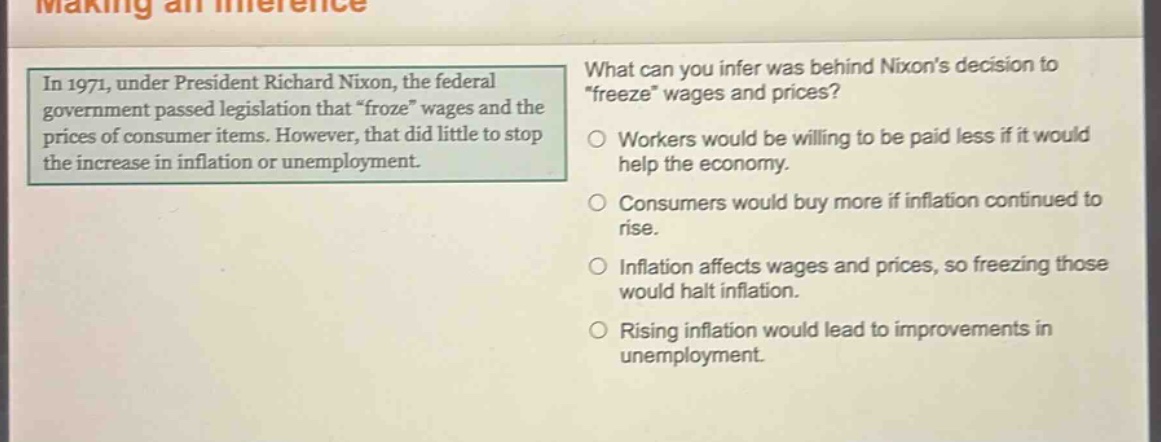
in 1971, under president richard nixon, the federal government passed legislation that “froze” wages and the prices of consumer items. however, that did little to stop the increase in inflation or unemployment. what can you infer was behind nixons decision to “freeze” wages and prices? workers would be willing to be paid less if it would help the economy. consumers would buy more if inflation continued to rise. inflation affects wages and prices, so freezing those would halt inflation. rising inflation would lead to improvements in unemployment.
Answer
Brief Explanations:
Nixon likely thought that since inflation affects wages and prices, freezing them would halt inflation. Workers are not generally willing to be paid less just to help the economy. Consumers usually buy less when inflation rises. Rising inflation typically doesn't lead to improvements in unemployment.
Answer:
Inflation affects wages and prices, so freezing those would halt inflation.