the chart below shows the economic cost of two school lunches.\n\n| | current lunch | healthier lunch…
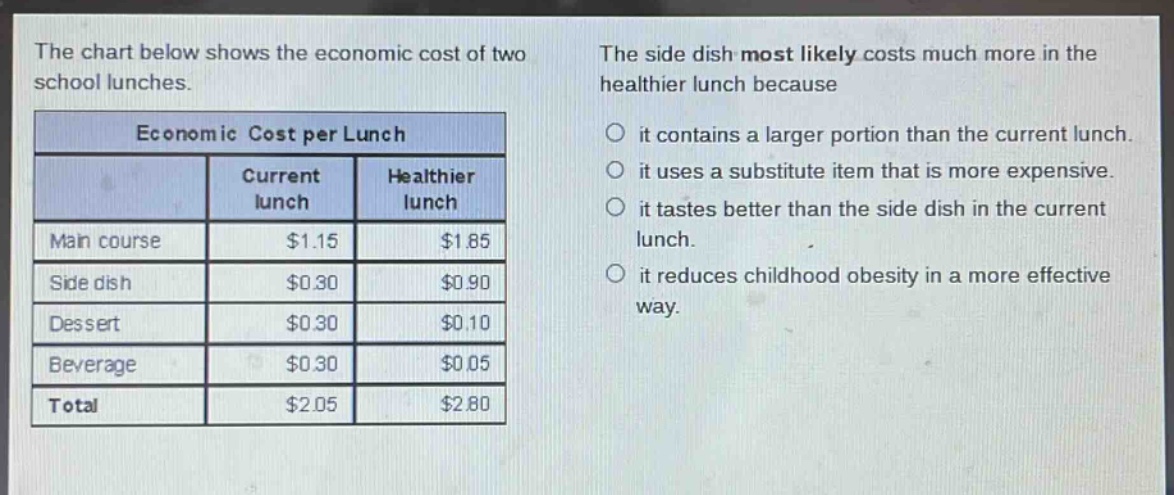
the chart below shows the economic cost of two school lunches.\n\n| | current lunch | healthier lunch |\n|--|--|--| \n| main course | $1.15 | $1.85 |\n| side dish | $0.30 | $0.90 |\n| dessert | $0.30 | $0.10 |\n| beverage | $0.30 | $0.05 |\n| total | $2.05 | $2.80 |\n\nthe side dish most likely costs much more in the healthier lunch because\n○ it contains a larger portion than the current lunch.\n○ it uses a substitute item that is more expensive.\n○ it tastes better than the side dish in the current lunch.\n○ it reduces childhood obesity in a more effective way.
Answer
Answer:
B. it uses a substitute item that is more expensive.
Brief Explanations:
The economic cost of the side dish in the healthier lunch is $0.90, compared to $0.30 for the current lunch's side dish. This represents a $0.60 (or 200%) increase. The most likely reason for this significant cost increase in the context of a "healthier lunch" is that the side dish has been changed to a substitute item that is inherently more expensive. Healthier ingredients, such as fresh produce (fruits, vegetables) or whole grains, often cost more than less healthy, processed alternatives that might have been used in the "current lunch." While a larger portion (Option A) could also increase cost, the shift to "healthier" often implies a qualitative change in the food item itself (a substitution), and these healthier substitutes frequently have higher ingredient or preparation costs. Option C (tastes better) is subjective and not a direct economic factor for cost. Option D (reduces childhood obesity) is a potential outcome or benefit, not a reason for the item's production cost.