when depositors put money into a bank, what does the bank do with this money?\nthe bank sends the money to a…
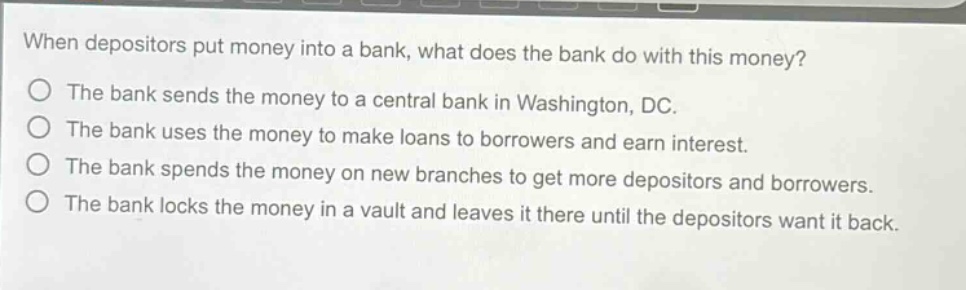
when depositors put money into a bank, what does the bank do with this money?\nthe bank sends the money to a central bank in washington, dc.\nthe bank uses the money to make loans to borrowers and earn interest.\nthe bank spends the money on new branches to get more depositors and borrowers.\nthe bank locks the money in a vault and leaves it there until the depositors want it back.
Answer
Brief Explanations:
Banks take deposits and use a portion of the funds to make loans to borrowers. They earn interest on these loans as a major source of income. Sending money to a central - bank in DC is not the main use of deposits. Spending on new branches is not the primary use of deposited money. Keeping money in a vault is not how banks operate as they are profit - seeking and use deposits for lending.
Answer:
The bank uses the money to make loans to borrowers and earn interest.