drag each action to the correct category. classify each action as expansionary or contractionary monetary…
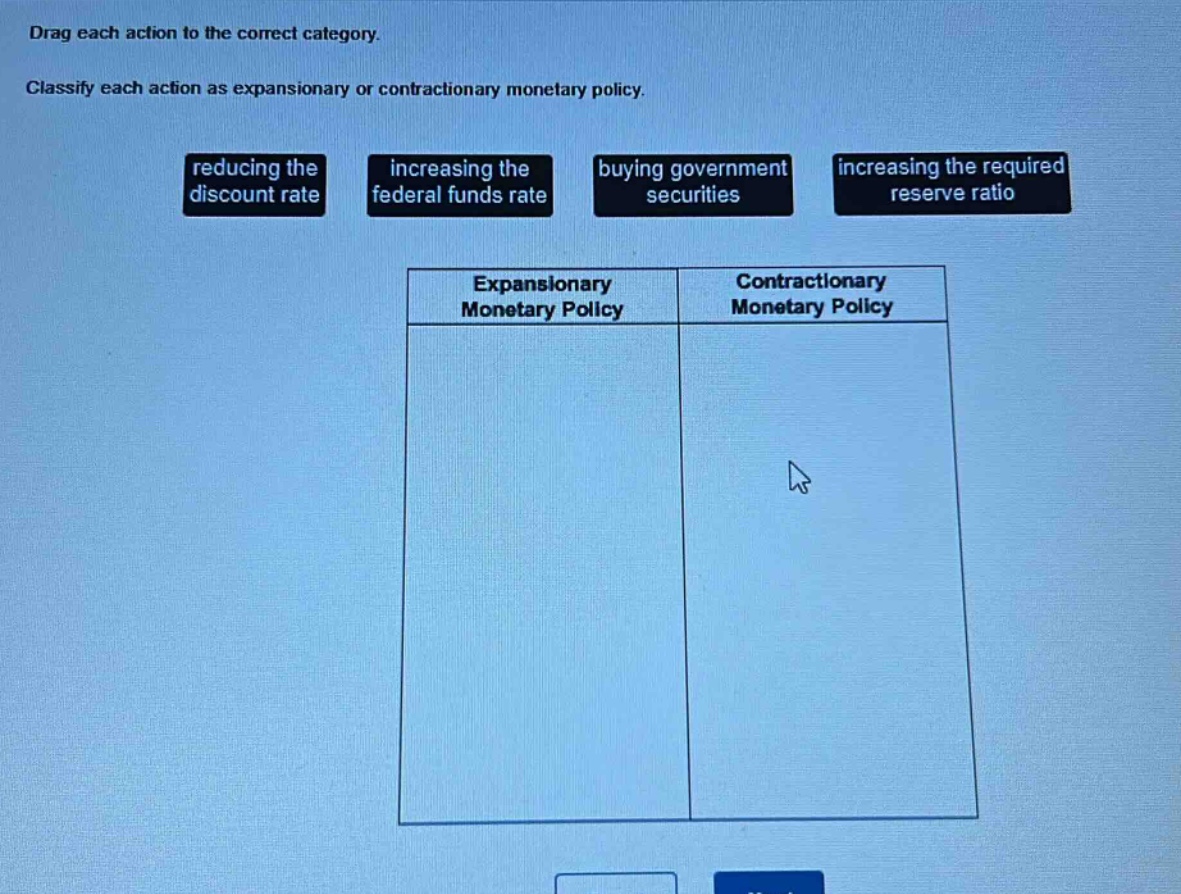
drag each action to the correct category. classify each action as expansionary or contractionary monetary policy. reducing the discount rate increasing the federal funds rate buying government securities increasing the required reserve ratio expansionary monetary policy contractionary monetary policy
Answer
Brief Explanations:
Expansionary monetary policy aims to increase the money - supply and stimulate economic activity. Reducing the discount rate makes it cheaper for banks to borrow from the central bank, increasing lending and money supply. Buying government securities injects money into the economy as the central bank pays for them. Contractionary monetary policy aims to decrease the money - supply. Increasing the federal funds rate makes borrowing more expensive for banks, reducing lending and money supply. Increasing the required reserve ratio means banks must hold more reserves, reducing the amount they can lend and decreasing the money supply.
Answer:
Expansionary Monetary Policy: reducing the discount rate, buying government securities Contractionary Monetary Policy: increasing the federal funds rate, increasing the required reserve ratio