drag the tiles to the correct boxes to complete the pairs. identify the trade regulation concept described…
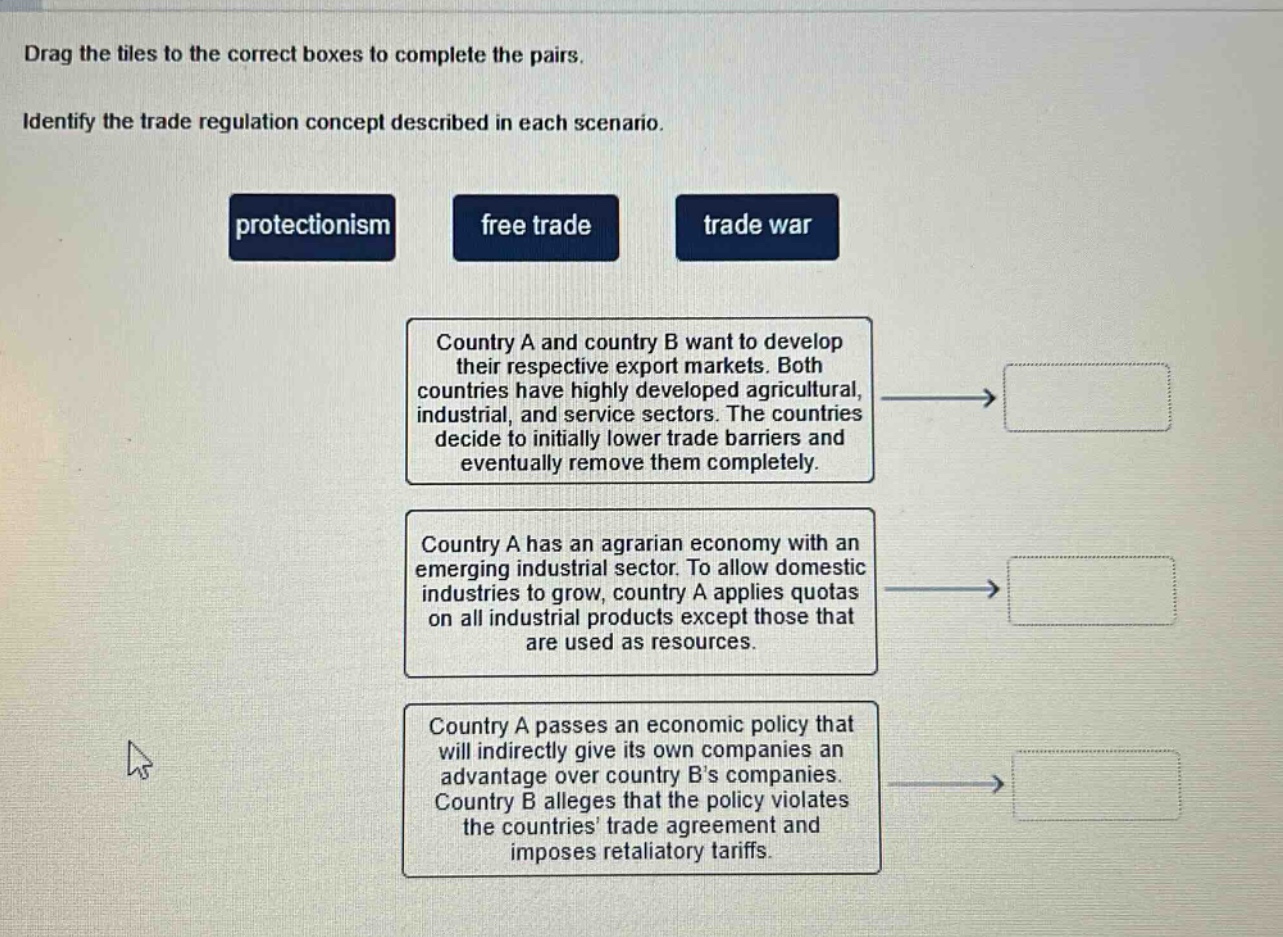
drag the tiles to the correct boxes to complete the pairs. identify the trade regulation concept described in each scenario. protectionism free trade trade war country a and country b want to develop their respective export markets. both countries have highly developed agricultural, industrial, and service sectors. the countries decide to initially lower trade barriers and eventually remove them completely. country a has an agrarian economy with an emerging industrial sector. to allow domestic industries to grow, country a applies quotas on all industrial products except those that are used as resources. country a passes an economic policy that will indirectly give its own companies an advantage over country bs companies. country b alleges that the policy violates the countries trade agreement and imposes retaliatory tariffs.
Answer
Brief Explanations:
- When countries lower and remove trade - barriers to develop export markets, it is free trade.
- Applying quotas to protect domestic industries from foreign competition is protectionism.
- When one country's policy causes retaliatory tariffs from another, it is a trade war.
Answer:
- free trade
- protectionism
- trade war