drag the tiles to the correct boxes to complete the pairs. match each type of tax to its description. rose…
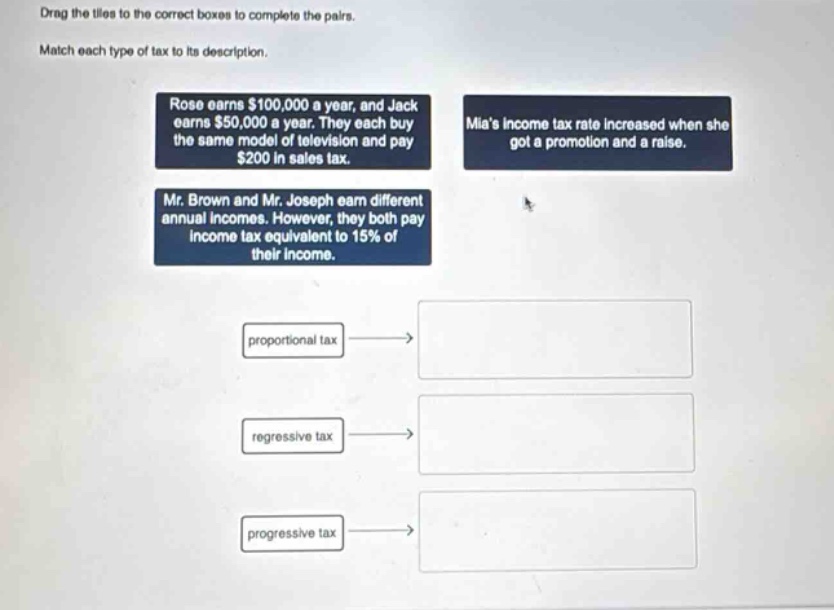
drag the tiles to the correct boxes to complete the pairs. match each type of tax to its description. rose earns $100,000 a year, and jack earns $50,000 a year. they each buy the same model of television and pay $200 in sales tax. mias income - tax rate increased when she got a promotion and a raise. mr. brown and mr. joseph earn different annual incomes. however, they both pay income tax equivalent to 15% of their income. proportional tax regressive tax progressive tax
Answer
Brief Explanations:
A proportional tax is a flat - rate tax where everyone pays the same percentage of their income. A regressive tax takes a larger percentage of income from low - income earners than from high - income earners. A progressive tax takes a larger percentage of income from high - income earners as income increases. For "Mr. Brown and Mr. Joseph earn different annual incomes. However, they both pay income tax equivalent to 15% of their income", it's a proportional tax as the tax rate is the same regardless of income level. For "Rose earns $100,000 a year, and Jack earns $50,000 a year. They each buy the same model of television and pay $200 in sales tax", since the $200 sales tax is a larger proportion of Jack's income than Rose's, it's a regressive tax. For "Mia's income tax rate increased when she got a promotion and a raise", it's a progressive tax as the tax rate rises with higher income.
Answer:
proportional tax → Mr. Brown and Mr. Joseph earn different annual incomes. However, they both pay income tax equivalent to 15% of their income. regressive tax → Rose earns $100,000 a year, and Jack earns $50,000 a year. They each buy the same model of television and pay $200 in sales tax. progressive tax → Mia's income tax rate increased when she got a promotion and a raise.