why does the fed pay interest to banks?\nit is interest on money held in reserve.\nit is interest on credit…
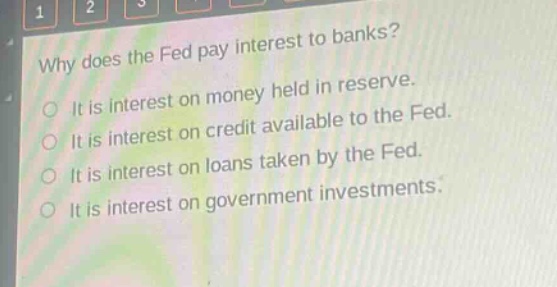
why does the fed pay interest to banks?\nit is interest on money held in reserve.\nit is interest on credit available to the fed.\nit is interest on loans taken by the fed.\nit is interest on government investments.
Answer
Brief Explanations:
The Federal Reserve (the Fed) pays interest to banks on the money that banks hold in reserve. This is a tool to manage the money supply and influence economic conditions. When banks hold reserves, they are not lending out that money. By paying interest on these reserves, the Fed can encourage banks to hold more reserves (which can slow down lending and economic activity if needed) or less (encouraging more lending and economic growth). The other options are incorrect. Credit available to the Fed, loans taken by the Fed, and government investments are not the reasons for the Fed paying interest to banks in this context.
Answer:
It is interest on money held in reserve.