which of the following is generally not an effect of having high rates of infectious disease (like malaria)…
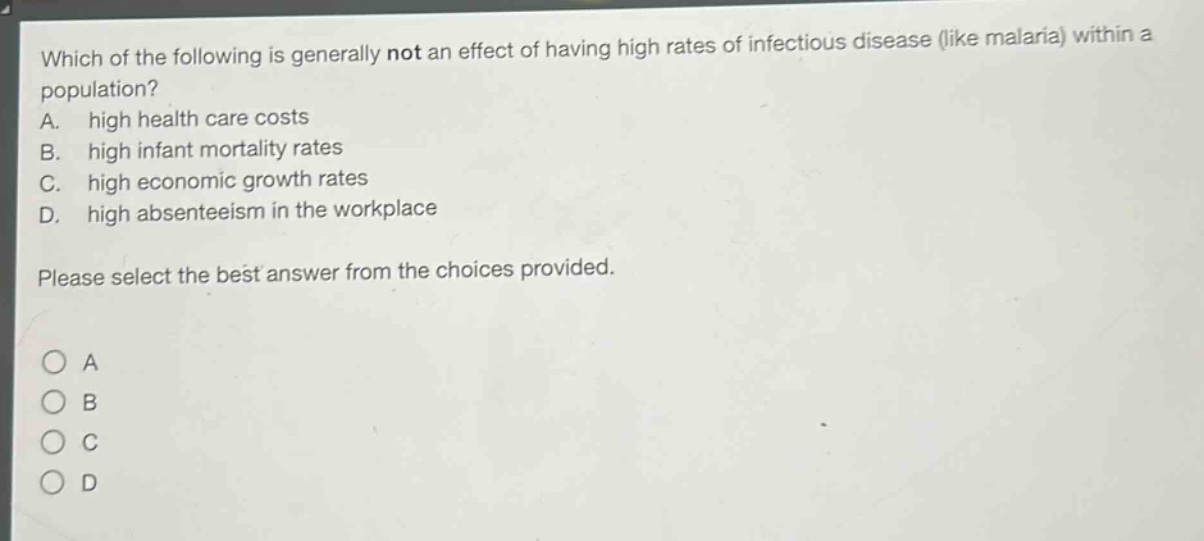
which of the following is generally not an effect of having high rates of infectious disease (like malaria) within a population?\na. high health care costs\nb. high infant mortality rates\nc. high economic growth rates\nd. high absenteeism in the workplace\nplease select the best answer from the choices provided.\na\nb\nc\nd
Answer
Brief Explanations:
- High rates of infectious diseases like malaria lead to increased healthcare costs (A) as more medical resources are needed.
- They also cause high infant mortality rates (B) due to the vulnerability of infants to such diseases.
- High absenteeism in the workplace (D) occurs as sick individuals cannot work.
- However, high economic growth rates (C) are not an effect. Infectious diseases typically hinder economic growth by reducing productivity (due to illness - related absenteeism), increasing healthcare expenditures (which can divert funds from other productive sectors), and causing premature deaths (losing productive workers).
Answer:
C. high economic growth rates