question 8 of 10\nwhich statement best summarizes how consumer expectations affect demand for a product?\na…
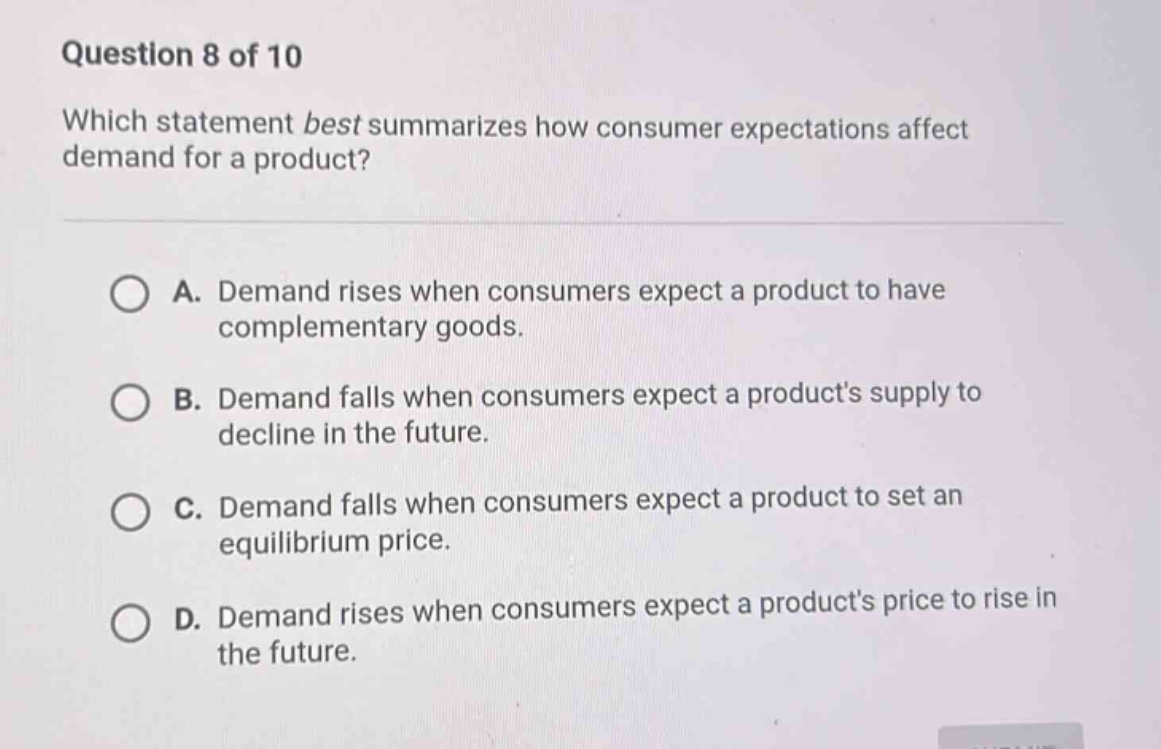
question 8 of 10\nwhich statement best summarizes how consumer expectations affect demand for a product?\na. demand rises when consumers expect a product to have complementary goods.\nb. demand falls when consumers expect a products supply to decline in the future.\nc. demand falls when consumers expect a product to set an equilibrium price.\nd. demand rises when consumers expect a products price to rise in the future.
Answer
Brief Explanations:
- Option A: Complementary goods (e.g., coffee and creamer) affect demand based on their own availability and price, not consumer expectations about them. So this option is incorrect.
- Option B: If consumers expect a product's supply to decline in the future, they may fear shortages and buy more now, increasing demand. So this option is incorrect.
- Option C: Equilibrium price is the price where supply equals demand. Consumer expectations about equilibrium price do not directly cause demand to fall. So this option is incorrect.
- Option D: When consumers expect a product's price to rise in the future, they are more likely to buy the product now to avoid paying a higher price later. This increases the current demand for the product.
Answer:
D. Demand rises when consumers expect a product's price to rise in the future.