read the excerpt from freakonomics. its worth thinking about the incentive a wrestler might have to throw a…
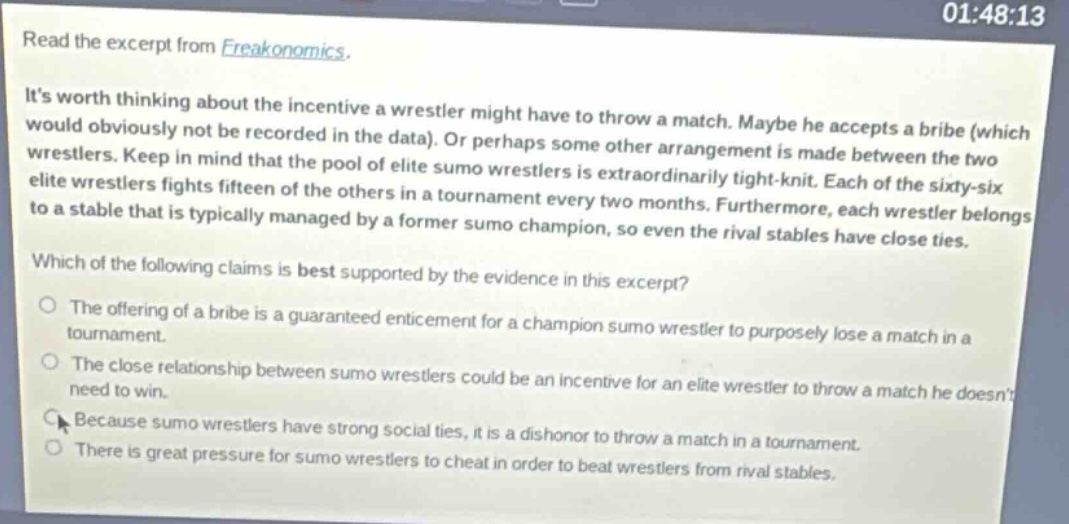
read the excerpt from freakonomics. its worth thinking about the incentive a wrestler might have to throw a match. maybe he accepts a bribe (which would obviously not be recorded in the data). or perhaps some other arrangement is made between the two wrestlers. keep in mind that the pool of elite sumo wrestlers is extraordinarily tight - knit. each of the sixty - six elite wrestlers fights fifteen of the others in a tournament every two months. furthermore, each wrestler belongs to a stable that is typically managed by a former sumo champion, so even the rival stables have close ties. which of the following claims is best supported by the evidence in this excerpt? the offering of a bribe is a guaranteed enticement for a champion sumo wrestler to purposely lose a match in a tournament. the close relationship between sumo wrestlers could be an incentive for an elite wrestler to throw a match he doesnt need to win. because sumo wrestlers have strong social ties, it is a dishonor to throw a match in a tournament. there is great pressure for sumo wrestlers to cheat in order to beat wrestlers from rival stables.
Answer
Brief Explanations:
The text mentions that the pool of elite sumo wrestlers is tight - knit, with each belonging to a stable often managed by a former champion and rival stables having close ties. This close relationship could potentially be an incentive for an elite wrestler to throw a match they don't need to win. The first option is too extreme as it says a bribe is a "guaranteed" enticement. The third option is not supported as there's no mention of it being a dishonor. The fourth option is about pressure to cheat to beat rival stables, which isn't the main point of the passage.
Answer:
The close relationship between sumo wrestlers could be an incentive for an elite wrestler to throw a match he doesn't need to win.