read the following excerpt from levitt and dubners freakonomics. in the real world, feldman learned to…
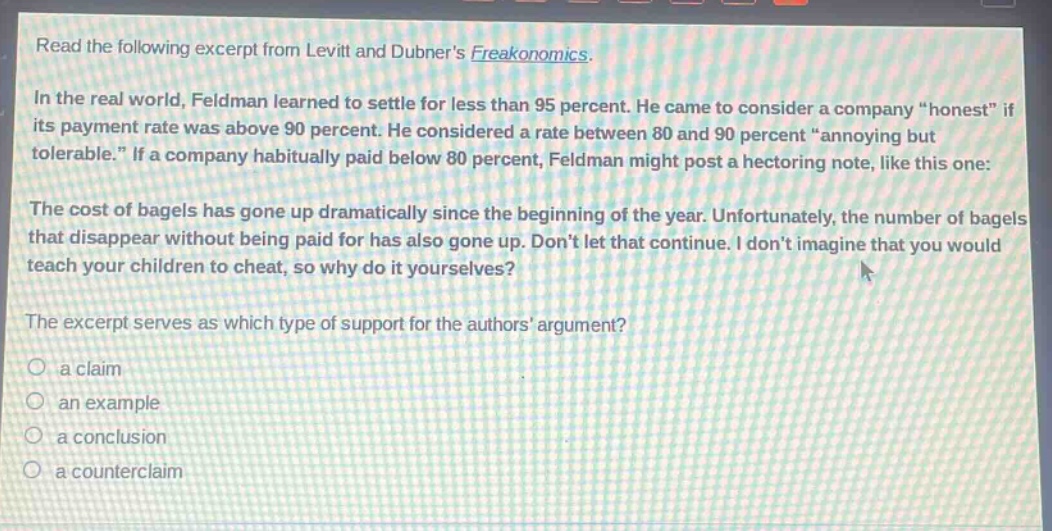
read the following excerpt from levitt and dubners freakonomics. in the real world, feldman learned to settle for less than 95 percent. he came to consider a company “honest” if its payment rate was above 90 percent. he considered a rate between 80 and 90 percent “annoying but tolerable.” if a company habitually paid below 80 percent, feldman might post a hectoring note, like this one: the cost of bagels has gone up dramatically since the beginning of the year. unfortunately, the number of bagels that disappear without being paid for has also gone up. dont let that continue. i dont imagine that you would teach your children to cheat, so why do it yourselves? the excerpt serves as which type of support for the authors argument? a claim an example a conclusion a counterclaim
Answer
Answer:
B. an example
Brief Explanations:
The excerpt shows Feldman's real - world experience with bagel payment rates at companies, which serves as an example to support the authors' argument.