select the correct answer.\nafter the 2008 recession, the amount of reserves in the us banking system…
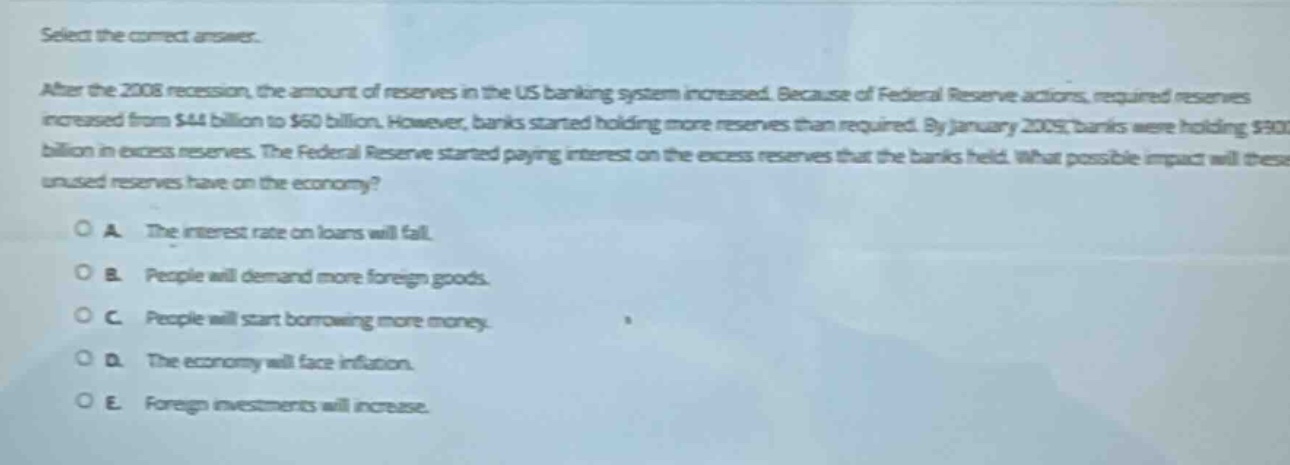
select the correct answer.\nafter the 2008 recession, the amount of reserves in the us banking system increased. because of federal reserve actions, required reserves increased from $44 billion to $60 billion. however, banks started holding more reserves than required. by january 2009, banks were holding $900 billion in excess reserves. the federal reserve started paying interest on the excess reserves that the banks held. what possible impact will these unused reserves have on the economy?\n\na. the interest rate on loans will fall.\nb. people will demand more foreign goods.\nc. people will start borrowing more money.\nd. the economy will face inflation.\ne. foreign investments will increase.
Answer
Answer:
A. The interest rate on loans will fall.
Brief Explanations:
When banks hold a large amount of excess reserves, they have more funds available to lend. With an increased supply of loan - able funds in the market, according to the law of supply and demand for credit, the price of borrowing (interest rate) will decrease.