this table shows the 2014 tax brackets for single taxpayers.\nwhich statement best supports the idea that…
this table shows the 2014 tax brackets for single taxpayers.\nwhich statement best supports the idea that the united states has a progressive income tax?\nsingle taxpayers (2014)\ntaxable income between: tax rate\n$0 $9,075 10%\n$9,075 $36,900 15%\n$36,900 $89,350 25%\n$89,350 $186,350 28%\n$186,350 $405,100 33%\n$405,100 $406,750 35%\n$406,750 and above 39.6%\nthe more money someone makes, the higher the percentage he or she pays in taxes.\nsingle - wage earners are taxed at the same percentage, regardless of income.\namericans pay higher taxes than single - wage earners in other countries.\ntax percentages are evenly distributed across the tax brackets.
Answer
Brief Explanations:
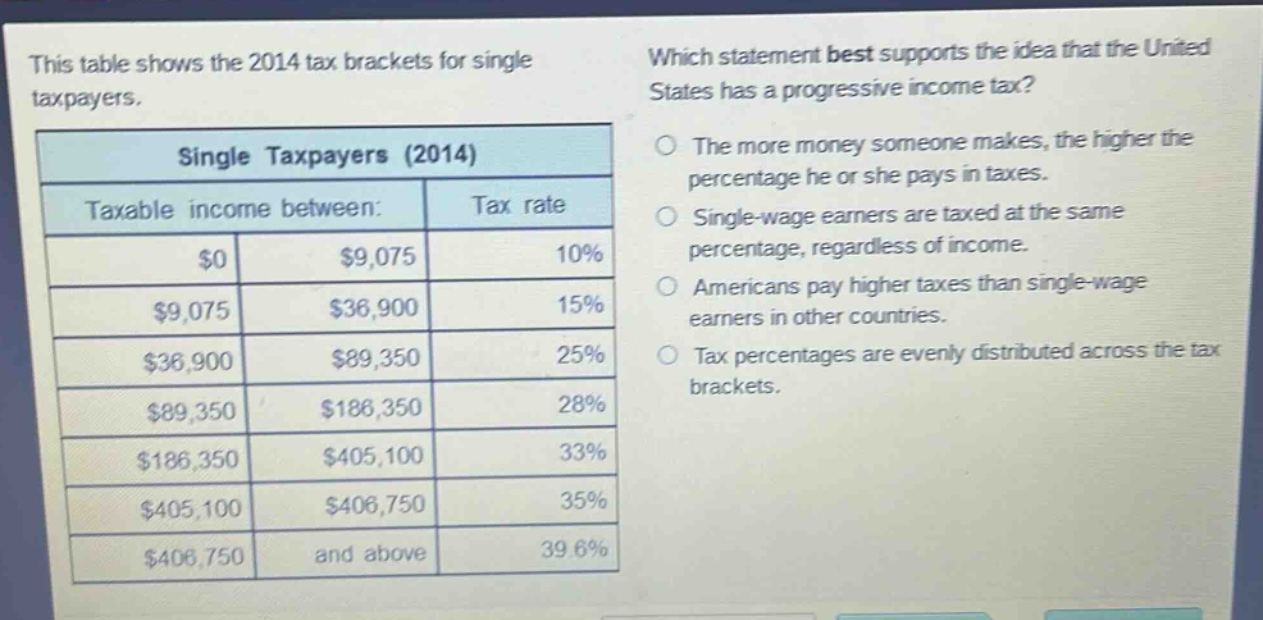
A progressive income tax system is characterized by tax rates that increase as the taxable income of an individual or entity increases. The provided table for single taxpayers in 2014 illustrates this principle:
- For income between $0 and $9,075, the tax rate is 10%.
- For income between $9,075 and $36,900, the tax rate is 15%.
- As income brackets rise, the corresponding tax rate also rises, up to 39.6% for income above $406,750. This structure, where higher earners pay a larger percentage of their income in taxes, is the hallmark of a progressive tax system.
Option 1 directly states this characteristic: "The more money someone makes, the higher the percentage he or she pays in taxes." This aligns with the data in the table and the definition of progressive taxation. Option 2 describes a flat tax, which is contrary to the table. Option 3 makes an international comparison, which doesn't explain the nature of the US tax system itself. Option 4 is not supported by the table, as the increases in tax percentages between brackets are not uniform, and it doesn't accurately define a progressive tax.
Answer:
The more money someone makes, the higher the percentage he or she pays in taxes.