what is true about both young and aging populations in terms of a nations economy?\na. both young and aging…
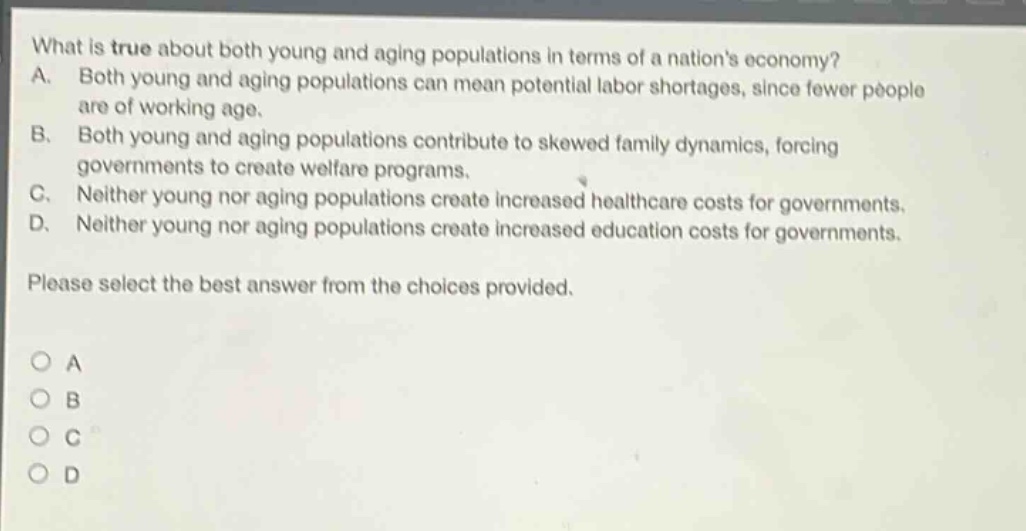
what is true about both young and aging populations in terms of a nations economy?\na. both young and aging populations can mean potential labor shortages, since fewer people are of working age.\nb. both young and aging populations contribute to skewed family dynamics, forcing governments to create welfare programs.\nc. neither young nor aging populations create increased healthcare costs for governments.\nd. neither young nor aging populations create increased education costs for governments.\nplease select the best answer from the choices provided.\n○ a\n○ b\n○ c\n○ d
Answer
Brief Explanations:
Young populations are not of working - age yet and aging populations are past their prime working years, both can lead to labor shortages. Young populations don't contribute to the labor force immediately and aging populations retire, reducing the number of working - age people. Option B is more about social and family aspects rather than direct economic labor - related ones. Options C and D are incorrect as young populations need education and both young and aging populations can drive up healthcare costs.
Answer:
A. Both young and aging populations can mean potential labor shortages, since fewer people are of working age.