application 3.5 who did you say is calling? literary digest? one of the most famous flops in survey history…
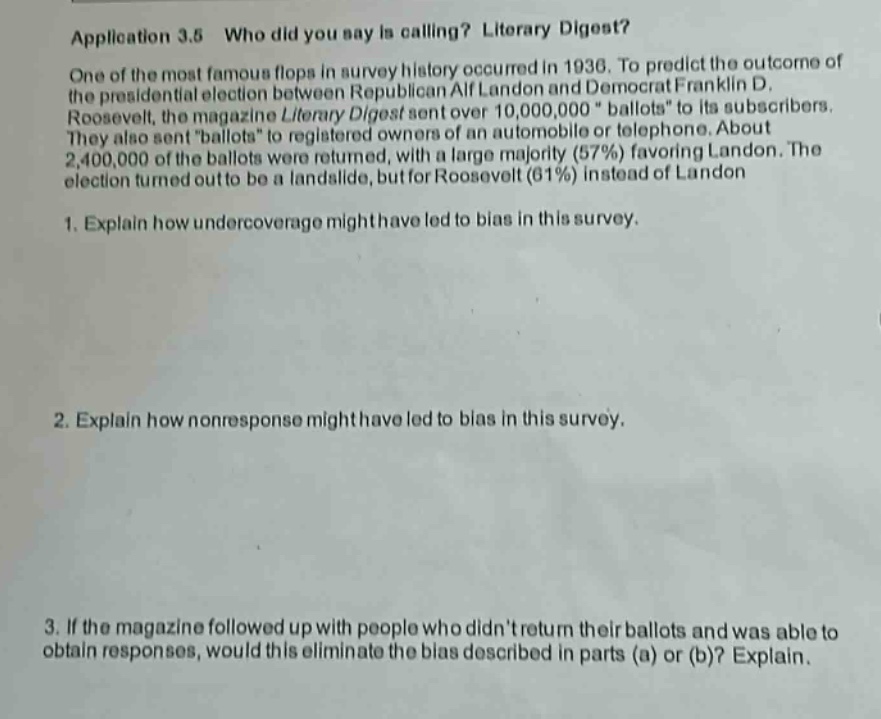
application 3.5 who did you say is calling? literary digest? one of the most famous flops in survey history occurred in 1936. to predict the outcome of the presidential election between republican alf landon and democrat franklin d. roosevelt, the magazine literary digest sent over 10,000,000 “ballots” to its subscribers. they also sent “ballots” to registered owners of an automobile or telephone. about 2,400,000 of the ballots were returned, with a large majority (57%) favoring landon. the election turned out to be a landslide, but for roosevelt (61%) instead of landon. 1. explain how undercoverage might have led to bias in this survey. 2. explain how nonresponse might have led to bias in this survey. 3. if the magazine followed up with people who didnt return their ballots and was able to obtain responses, would this eliminate the bias described in parts (a) or (b)? explain.
Answer
Brief Explanations:
- Undercoverage bias: The survey sample included only magazine subscribers, automobile, and telephone owners. In 1936, these groups were more likely to be wealthy and Republican - leaning. Poorer people, who were more likely to support Roosevelt, were under - represented, leading to bias.
- Non - response bias: Those who returned the ballots may have had different political views than those who did not. For example, people with stronger opinions (in this case, Landon supporters) may have been more likely to respond, skewing the results.
- Effect on bias: Following up on non - respondents would likely reduce non - response bias as it would include the views of those who initially did not respond. However, it would not eliminate undercoverage bias since the initial sample was already non - representative due to the sampling method (excluding non - subscribers, non - automobile and non - telephone owners).
Answer:
- The sample excluded poorer people who were more likely to support Roosevelt, leading to bias.
- People with stronger opinions (Landon supporters) may have been more likely to respond, skewing results.
- It would reduce non - response bias but not undercoverage bias.