british government leaders didnt present the zimmermann telegram to wilson for a few weeks. hall reminded…
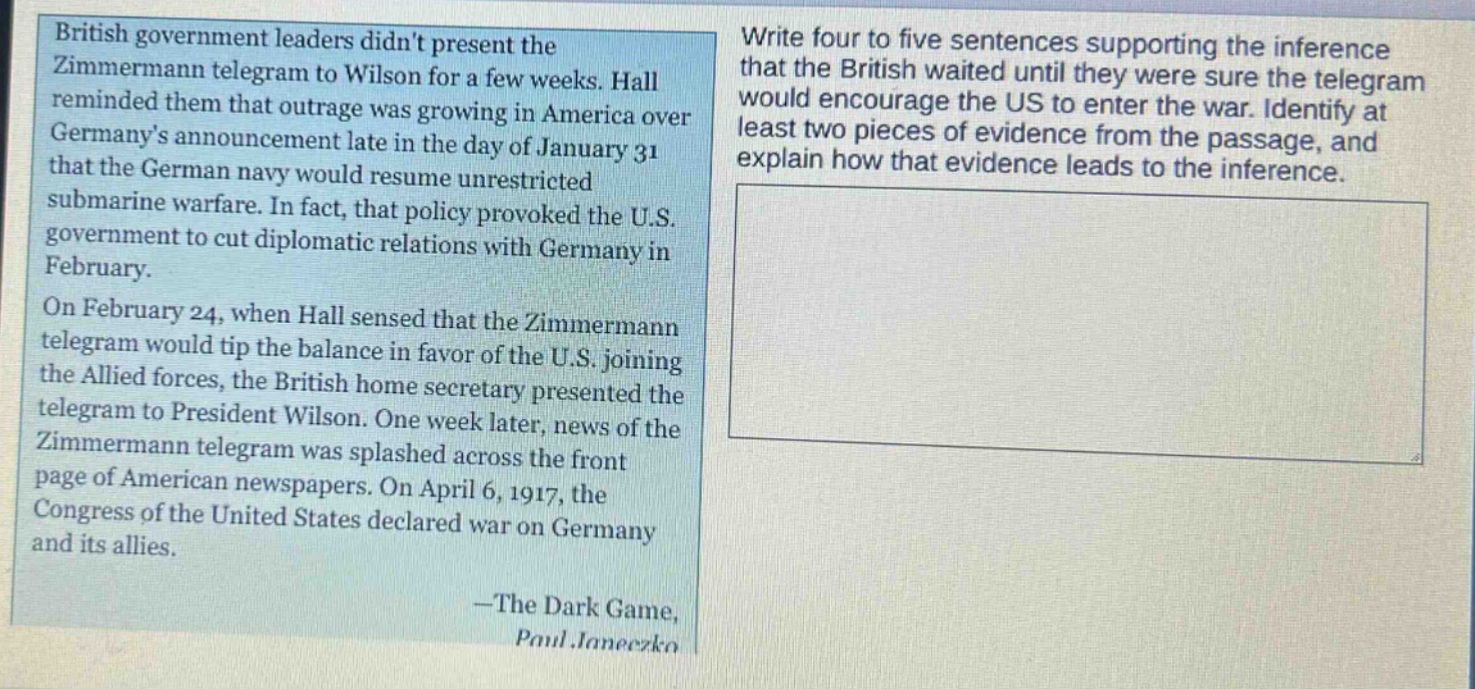
british government leaders didnt present the zimmermann telegram to wilson for a few weeks. hall reminded them that outrage was growing in america over germanys announcement late in the day of january 31 that the german navy would resume unrestricted submarine warfare. in fact, that policy provoked the u.s. government to cut diplomatic relations with germany in february. on february 24, when hall sensed that the zimmermann telegram would tip the balance in favor of the u.s. joining the allied forces, the british home secretary presented the telegram to president wilson. one week later, news of the zimmermann telegram was splashed across the front page of american newspapers. on april 6, 1917, the congress of the united states declared war on germany and its allies. -the dark game, paul janeczko write four to five sentences supporting the inference that the british waited until they were sure the telegram would encourage the us to enter the war. identify at least two pieces of evidence from the passage, and explain how that evidence leads to the inference.
Answer
Breve explicación:
La evidencia principal es que el secreto británico, Hall, sintió que el telegrama de Zimmermann inclinaría la balanza a favor de los EE. UU. unirse a las fuerzas aliadas antes de presentar el telegrama a Wilson. Además, el hecho de que el gobierno estadounidense cortó relaciones diplomáticas con Alemania en febrero debido a la guerra naval submarina no restringida de Alemania muestra que el sentimiento anti - alemán estaba creciendo en EE. UU. El hecho de que el anuncio del telegrama en los periódicos estadounidenses se produjo una semana después de presentárselo a Wilson y que EE. UU. declaró guerra poco después sugiere que el telegrama fue un factor determinante.
Respuesta:
El hecho de que Hall sintiera que el telegrama inclinaría la balanza a favor de EE. UU. unirse a las fuerzas aliadas antes de presentarlo a Wilson muestra que los británicos esperaron hasta estar seguros de su impacto. Además, el creciente sentimiento anti - alemán en EE. UU. debido a la guerra naval submarina no restringida de Alemania y el rápido seguimiento de la declaración de guerra después de la publicación del telegrama en los periódicos estadounidenses son pruebas de que los británicos esperaron para que el telegrama tenga el mayor impacto posible en la decisión de EE. UU. de entrar en la guerra.