combine the sentence and clause provided to create the most logical option.\nsentence: do you speak…
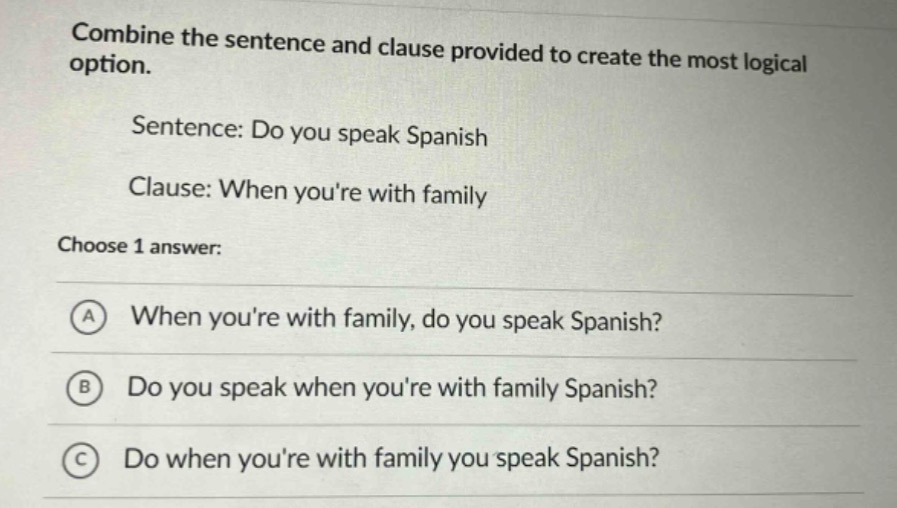
combine the sentence and clause provided to create the most logical option.\nsentence: do you speak spanish\nclause: when youre with family\nchoose 1 answer:\na when youre with family, do you speak spanish?\nb do you speak when youre with family spanish?\nc do when youre with family you speak spanish?
Answer
Brief Explanations:
The clause "When you're with family" is an adverb - clause of time. In English, adverb - clauses of time are usually placed at the beginning of a sentence (followed by a comma) or at the end. Option A correctly places the clause at the beginning and has the correct word - order for the question. Option B has incorrect word - order as "Spanish" should come after "speak". Option C has incorrect word - order with "Do" placed in an inappropriate position.
Answer:
A. When you're with family, do you speak Spanish?