critical lens analysis\nchapter 7\nin this chapter, the truth about daisy and gatsby is revealed to tom, and…
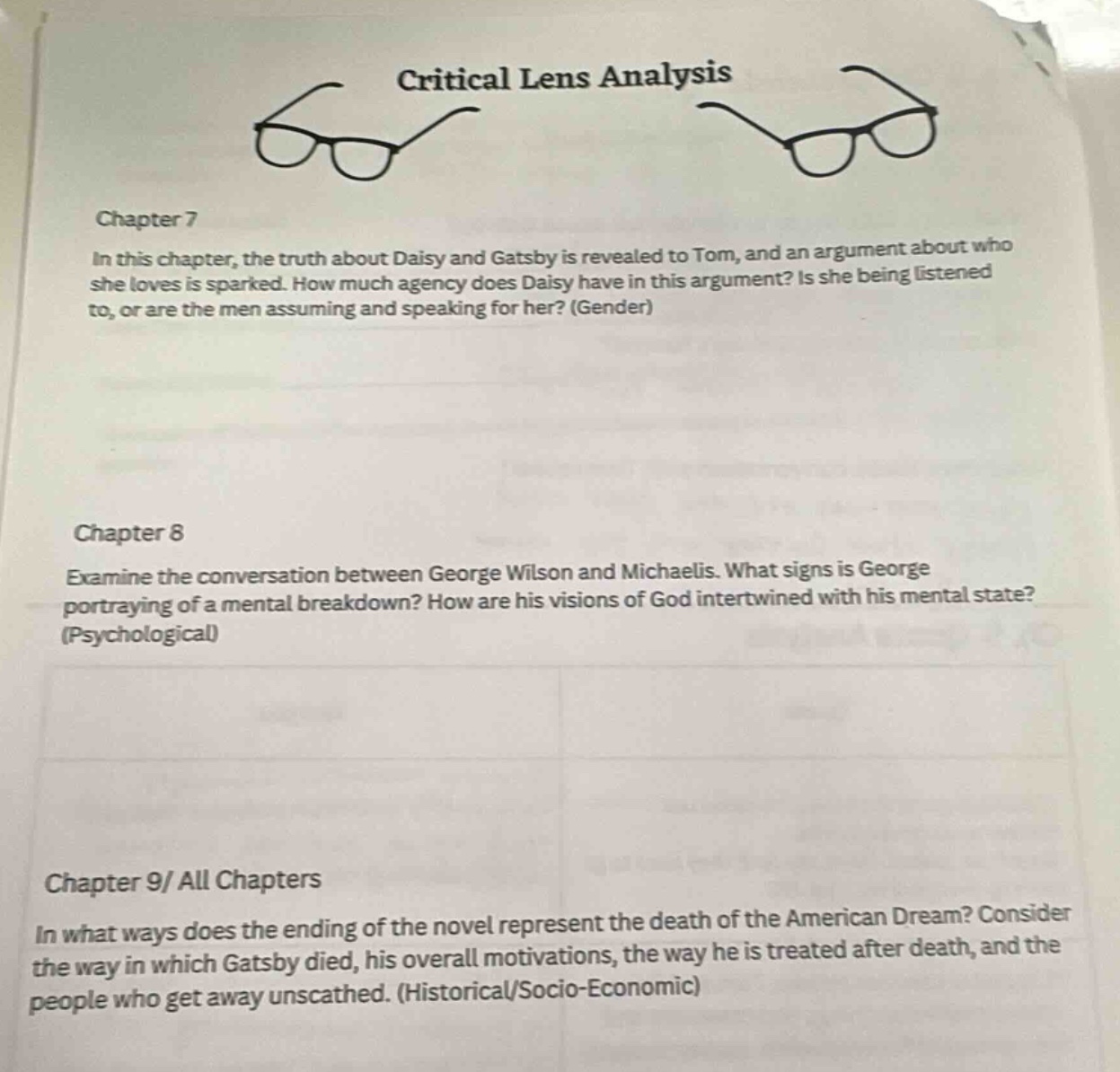
critical lens analysis\nchapter 7\nin this chapter, the truth about daisy and gatsby is revealed to tom, and an argument about who she loves is sparked. how much agency does daisy have in this argument? is she being listened to, or are the men assuming and speaking for her? (gender)\nchapter 8\nexamine the conversation between george wilson and michaelis. what signs is george portraying of a mental breakdown? how are his visions of god intertwined with his mental state? (psychological)\nchapter 9/ all chapters\nin what ways does the ending of the novel represent the death of the american dream? consider the way in which gatsby died, his overall motivations, the way he is treated after death, and the people who get away unscathed. (historical/socio - economic)
Answer
Answer:
Chapter 7: Daisy has limited agency. The men often speak over her and assume her feelings rather than truly listening. Chapter 8: George portrays signs of mental breakdown like erratic speech and extreme emotional outbursts. His visions of God seem to be a coping - mechanism, reflecting his despair and confusion in his mental state. Chapter 9/All Chapters: Gatsby's death, his unfulfilled dreams despite his efforts, the callous treatment of his death, and the unscathed wealthy who caused the chaos represent the death of the American Dream. His pursuit of wealth and love to fit into high - society was in vain, mirroring the破灭 of the ideal of upward social mobility and the pursuit of happiness.
Brief Explanations:
For Chapter 7, gender dynamics are at play as men dominate the conversation. In Chapter 8, psychological analysis of George's state is based on his behavior and beliefs. For Chapter 9, historical and socio - economic context is used to interpret the end of the American Dream through Gatsby's story.