which of the following sentences uses the present perfect correctly?\ntú has ido al mar en el verano.\ntú…
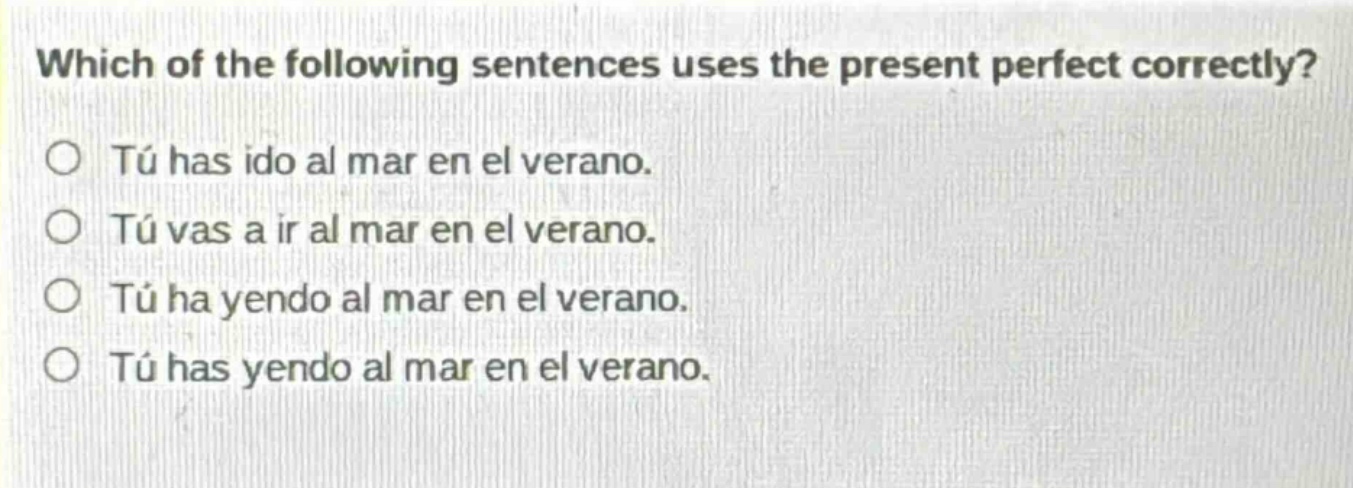
which of the following sentences uses the present perfect correctly?\ntú has ido al mar en el verano.\ntú vas a ir al mar en el verano.\ntú ha yendo al mar en el verano.\ntú has yendo al mar en el verano.
Answer
Answer:
Tú has ido al mar en el verano.
Brief Explanations:
In Spanish, the present - perfect tense is formed with "haber" (in the appropriate form) + past participle. "Has ido" follows this structure correctly. The second option is future - "vas a ir". The third, fourth, and fifth options have incorrect verb forms as "ha yendo" and "has yendo" are not correct present - perfect forms in Spanish.