in north america, farmers plowing the rocky new england soil, or even the proud virginians with their slave…
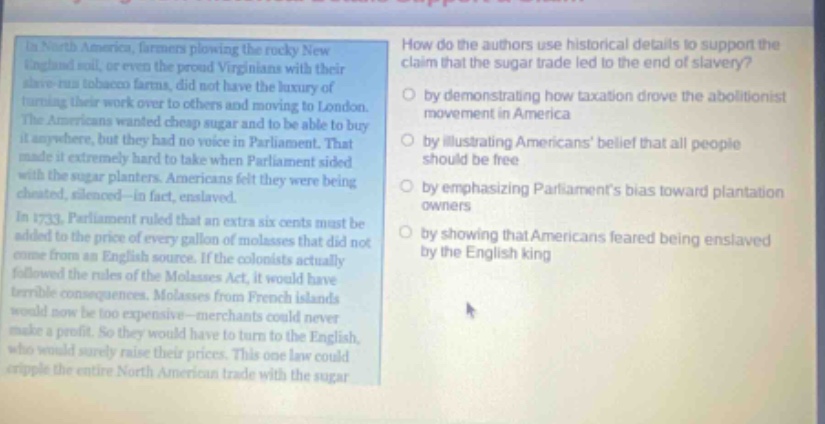
in north america, farmers plowing the rocky new england soil, or even the proud virginians with their slave - run tobacco farms, did not have the luxury of turning their work over to others and moving to london. the americans wanted cheap sugar and to be able to buy it anywhere, but they had no voice in parliament. that made it extremely hard to take when parliament sided with the sugar planters. americans felt they were being cheated, silenced - in fact, enslaved. in 1733, parliament ruled that an extra six cents must be added to the price of every gallon of molasses that did not come from an english source. if the colonists actually followed the rules of the molasses act, it would have terrible consequences. molasses from french islands would now be too expensive - merchants could never make a profit. so they would have to turn to the english, who would surely raise their prices. this one law could cripple the entire north american trade with the sugar. how do the authors use historical details to support the claim that the sugar trade led to the end of slavery? by demonstrating how taxation drove the abolitionist movement in america by illustrating americans belief that all people should be free by emphasizing parliaments bias toward plantation owners by showing that americans feared being enslaved by the english king
Answer
Brief Explanations:
Los autores enfatizan cómo la legislación de Parlament favoraba a los propietarios de plantaciones, lo cual mostró las injusticias del sistema del comercio del azúcar y contribuyó al movimiento abolicionista que llevó al fin de la esclavitud.
Answer:
by emphasizing Parliament's bias toward plantation owners