question 20\nis used when the audience needs to find out what a character is thinking, but the rest of the…
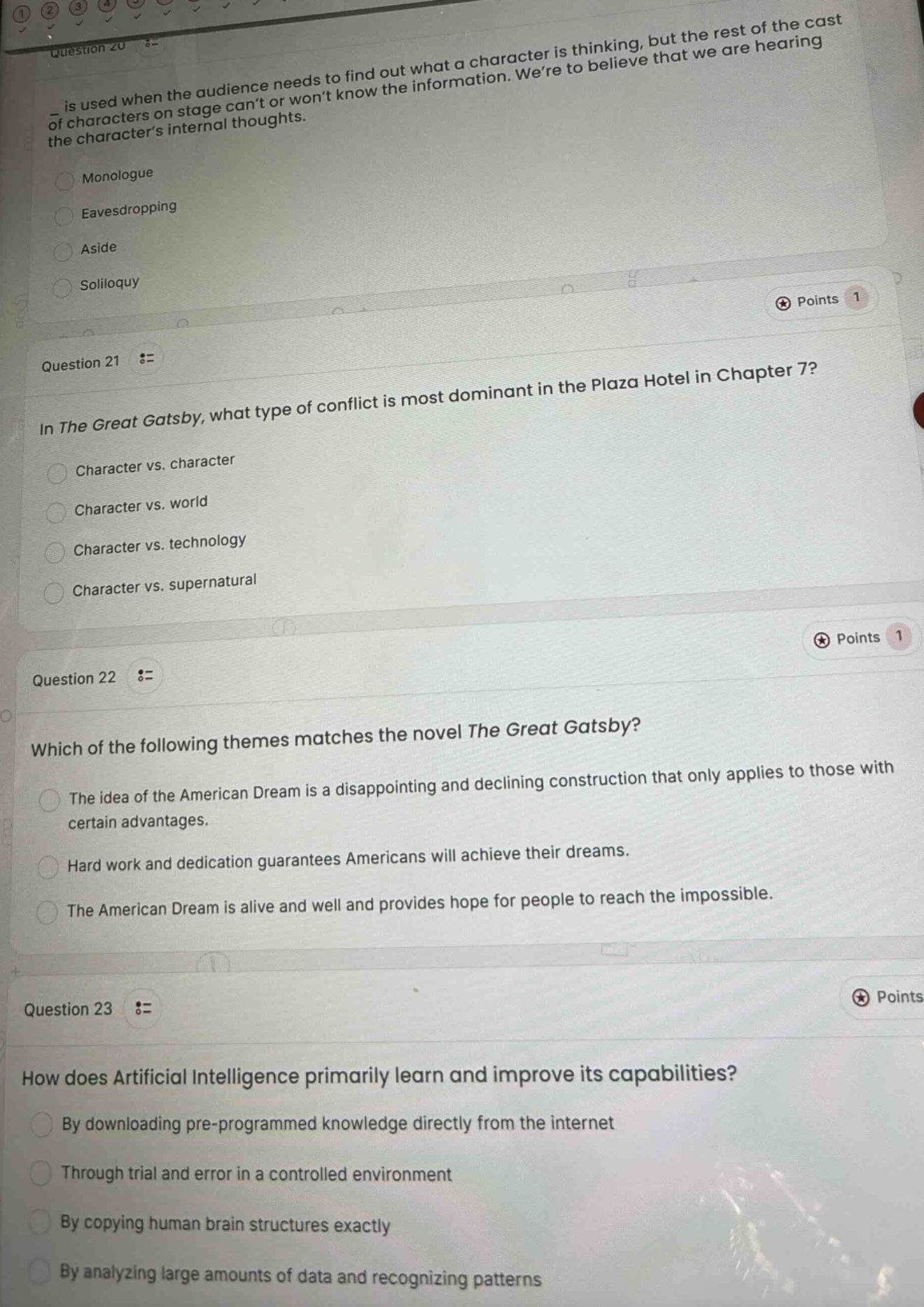
question 20\nis used when the audience needs to find out what a character is thinking, but the rest of the cast of characters on stage cant or wont know the information. were to believe that we are hearing the characters internal thoughts.\nmonologue\neavesdropping\naside\nsoliloquy\npoints 1\nquestion 21\nin the great gatsby, what type of conflict is most dominant in the plaza hotel in chapter 7?\ncharacter vs. character\ncharacter vs. world\ncharacter vs. technology\ncharacter vs. supernatural\npoints 1\nquestion 22\nwhich of the following themes matches the novel the great gatsby?\nthe idea of the american dream is a disappointing and declining construction that only applies to those with certain advantages.\nhard work and dedication guarantees americans will achieve their dreams.\nthe american dream is alive and well and provides hope for people to reach the impossible.\npoints\nquestion 23\nhow does artificial intelligence primarily learn and improve its capabilities?\nby downloading pre - programmed knowledge directly from the internet\nthrough trial and error in a controlled environment\nby copying human brain structures exactly\nby analyzing large amounts of data and recognizing patterns
Answer
Answer:
Question 20: Soliloquy Question 21: Character vs. character Question 22: The idea of the American Dream is a disappointing and declining construction that only applies to those with certain advantages. Question 23: By analyzing large amounts of data and recognizing patterns
Brief Explanations:
Question 20: Soliloquy reveals a character's inner - thoughts to the audience while others on stage are unaware. Question 21: In the Plaza Hotel scene in The Great Gatsby, there are confrontations between characters. Question 22: The Great Gatsby often critiques the American Dream as unattainable for most. Question 23: AI mainly learns from data - driven pattern recognition.