read the excerpt from samuel johnsons a dictionary of the english language. madness. n.s. from mad…
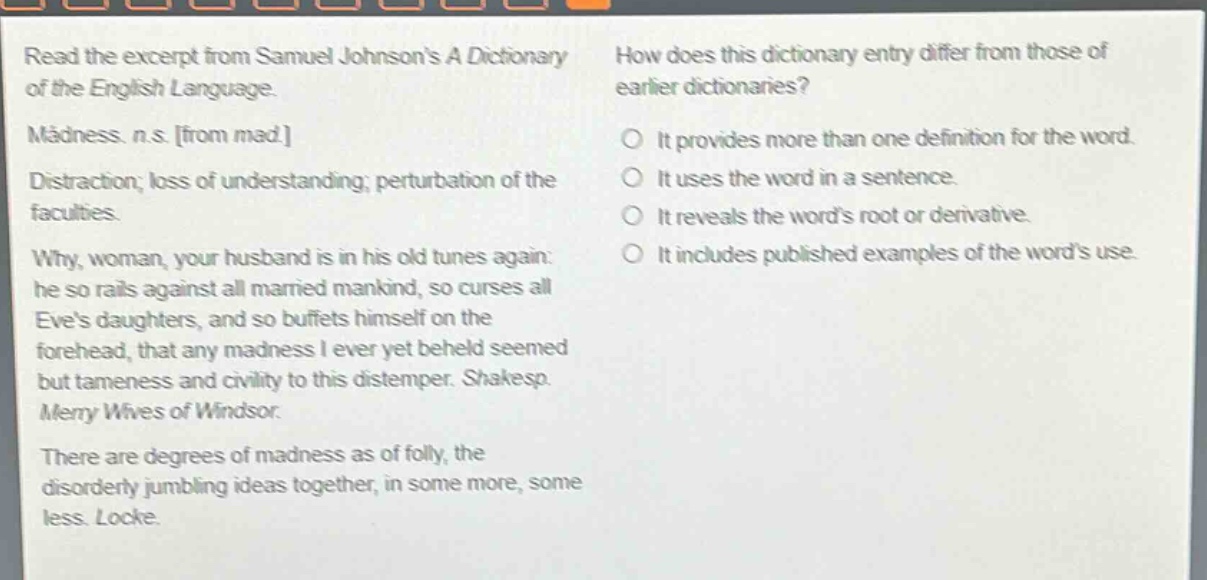
read the excerpt from samuel johnsons a dictionary of the english language. madness. n.s. from mad. distraction; loss of understanding; perturbation of the faculties. why, woman, your husband is in his old tunes again: he so rails against all married mankind, so curses all eves daughters, and so buffets himself on the forehead, that any madness i ever yet beheld seemed but tameness and civility to this distemper. shakesp. merry wives of windsor. there are degrees of madness as of folly, the disorderly jumbling ideas together, in some more, some less. locke. how does this dictionary entry differ from those of earlier dictionaries? it provides more than one definition for the word. it uses the word in a sentence. it reveals the words root or derivative. it includes published examples of the words use.
Answer
Answer:
It includes published examples of the word's use.
Brief Explanations:
Earlier dictionaries often just gave definitions. This entry has quotes from Shakespeare and Locke as usage examples.