read the passage from sugar changed the world. cutting cane was hard work, but it was nothing like what came…
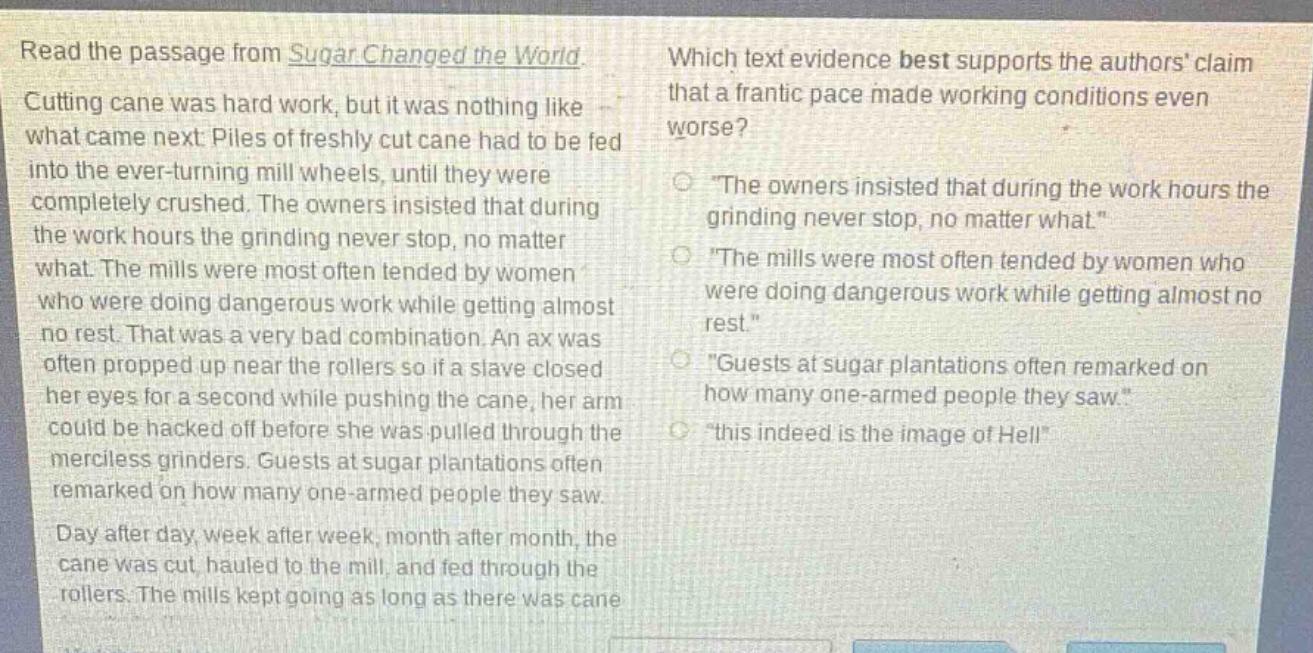
read the passage from sugar changed the world. cutting cane was hard work, but it was nothing like what came next: piles of freshly cut cane had to be fed into the ever - turning mill wheels, until they were completely crushed. the owners insisted that during the work hours the grinding never stop, no matter what. the mills were most often tended by women who were doing dangerous work while getting almost no rest. that was a very bad combination. an ax was often propped up near the rollers so if a slave closed her eyes for a second while pushing the cane, her arm could be hacked off before she was pulled through the merciless grinders. guests at sugar plantations often remarked on how many one - armed people they saw. day after day, week after week, month after month, the cane was cut, hauled to the mill, and fed through the rollers. the mills kept going as long as there was cane. which text evidence best supports the authors claim that a frantic pace made working conditions even worse? \the owners insisted that during the work hours the grinding never stop, no matter what.\ \the mills were most often tended by women who were doing dangerous work while getting almost no rest.\ \guests at sugar plantations often remarked on how many one - armed people they saw.\ \this indeed is the image of hell\
Answer
Brief Explanations:
La evidencia de texto "Guests at sugar plantations often remarked on how many one - armed people they saw" muestra cómo el ritmo frenético hizo que las condiciones de trabajo fueran peores, ya que se produjeron accidentes graves como la pérdida de brazos.
Answer:
"Guests at sugar plantations often remarked on how many one - armed people they saw."