read the passage from sugar changed the world. slavery was abolished in the british empire in 1833, thirty…
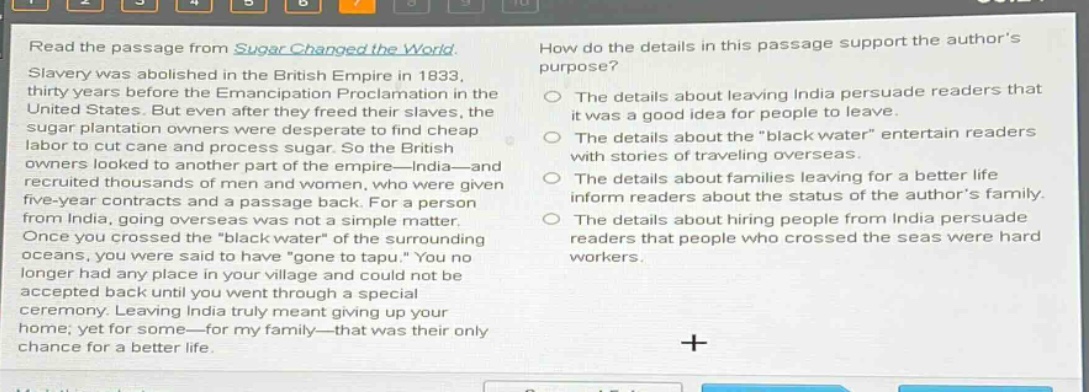
read the passage from sugar changed the world. slavery was abolished in the british empire in 1833, thirty years before the emancipation proclamation in the united states. but even after they freed their slaves, the sugar plantation owners were desperate to find cheap labor to cut cane and process sugar. so the british owners looked to another part of the empire—india—and recruited thousands of men and women, who were given five - year contracts and a passage back. for a person from india, going overseas was not a simple matter. once you crossed the \black water\ of the surrounding oceans, you were said to have \gone to tapu.\ you no longer had any place in your village and could not be accepted back until you went through a special ceremony. leaving india truly meant giving up your home; yet for some—for my family—that was their only chance for a better life. how do the details in this passage support the authors purpose? the details about leaving india persuade readers that it was a good idea for people to leave. the details about the \black water\ entertain readers with stories of traveling overseas. the details about families leaving for a better life inform readers about the status of the authors family. the details about hiring people from india persuade readers that people who crossed the seas were hard workers.
Answer
Brief Explanations:
The passage discusses how sugar - cane owners, after the abolition of slavery in the British Empire, recruited workers from India. The details about hiring people from India show the efforts to find cheap labor, persuading readers that those who crossed the seas were hard - working as they were sought after for such labor - intensive work. The other options do not accurately reflect the author's purpose in presenting these details.
Answer:
The details about hiring people from India persuade readers that people who crossed the seas were hard workers.