read the sentence. over the course of ones lifetime, we can expect to eat an average of seventy insects…
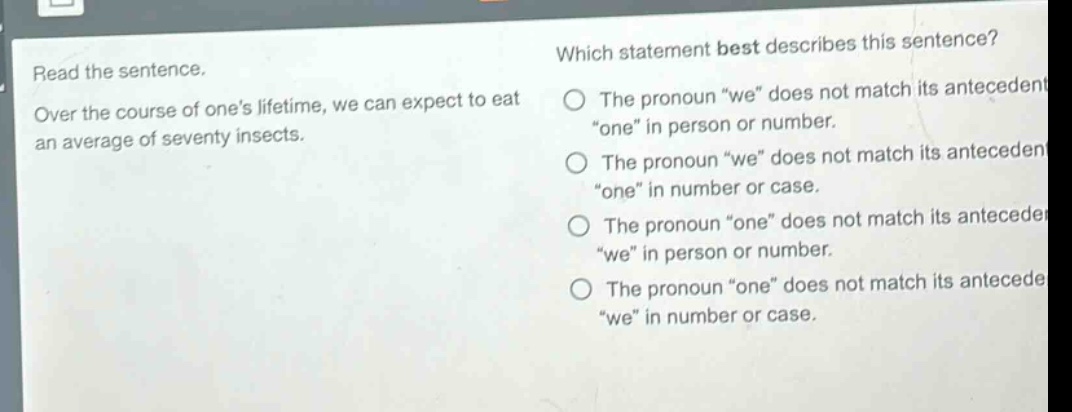
read the sentence. over the course of ones lifetime, we can expect to eat an average of seventy insects. which statement best describes this sentence? the pronoun \we\ does not match its antecedent \one\ in person or number. the pronoun \we\ does not match its antecedent \one\ in number or case. the pronoun \one\ does not match its antecedent \we\ in person or number. the pronoun \one\ does not match its antecedent \we\ in number or case.
Answer
Brief Explanations:
The antecedent "one" is singular and third - person, while the pronoun "we" is plural and first - person. Pronouns must agree with their antecedents in person and number.
Answer:
The pronoun "we" does not match its antecedent "one" in person or number.