read the sentence.\nthe lawyer presented a clear argument to the jury it was unbelievable how influenced…
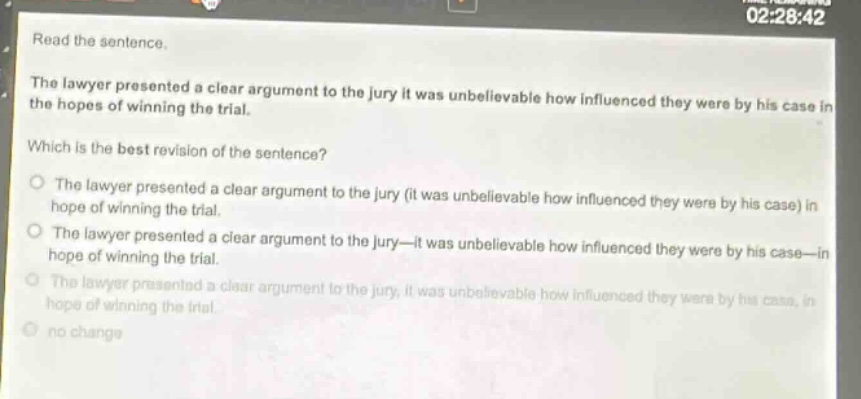
read the sentence.\nthe lawyer presented a clear argument to the jury it was unbelievable how influenced they were by his case in the hopes of winning the trial.\nwhich is the best revision of the sentence?\no the lawyer presented a clear argument to the jury (it was unbelievable how influenced they were by his case) in hope of winning the trial.\no the lawyer presented a clear argument to the jury—it was unbelievable how influenced they were by his case—in hope of winning the trial.\no the lawyer presented a clear argument to the jury, it was unbelievable how influenced they were by his case, in hope of winning the trial.\no no change
Answer
Brief Explanations:
The original sentence is a run - on. Using em dashes to set off the non - essential clause "it was unbelievable how influenced they were by his case" makes the sentence more grammatically correct and easier to read. Parentheses can also be used for this purpose but em dashes are a more common and stylistically appropriate choice here. The comma - separated version is still a run - on.
Answer:
The lawyer presented a clear argument to the jury—it was unbelievable how influenced they were by his case—in hope of winning the trial.