read the sentences.\nthere were five original iroquois nations. in the early 1700s, the tuscarora joined the…
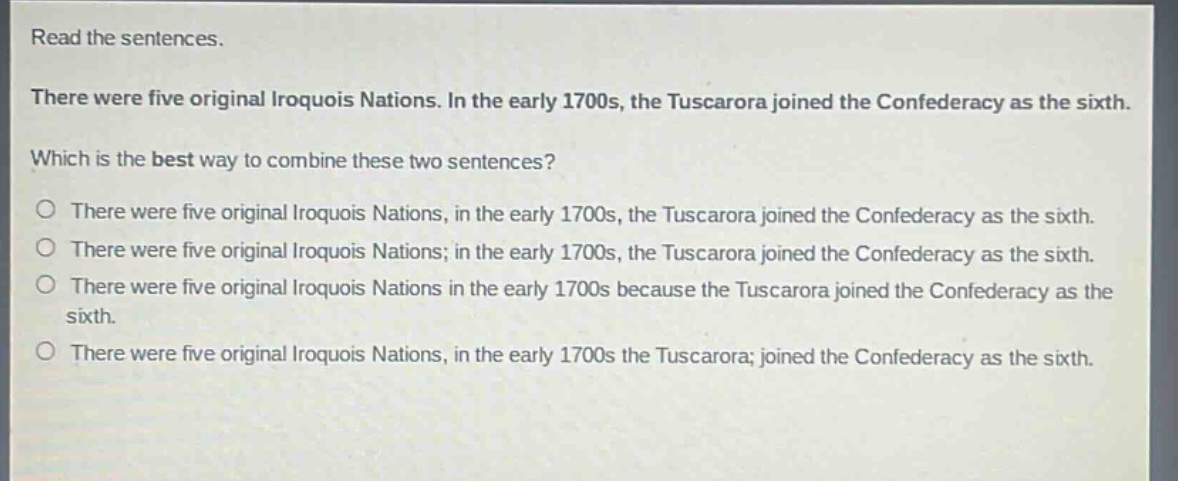
read the sentences.\nthere were five original iroquois nations. in the early 1700s, the tuscarora joined the confederacy as the sixth.\nwhich is the best way to combine these two sentences?\no there were five original iroquois nations, in the early 1700s, the tuscarora joined the confederacy as the sixth.\no there were five original iroquois nations; in the early 1700s, the tuscarora joined the confederacy as the sixth.\no there were five original iroquois nations in the early 1700s because the tuscarora joined the confederacy as the sixth.\no there were five original iroquois nations, in the early 1700s the tuscarora; joined the confederacy as the sixth.
Answer
Answer:
There were five original Iroquois Nations; in the early 1700s, the Tuscarora joined the Confederacy as the sixth.
Brief Explanations:
A semicolon can be used to combine two related independent clauses. The first option has a comma - splice error. The third option has an incorrect use of "because" as there is no causal relationship. The fourth option has incorrect punctuation with the semicolon in the wrong place.