read the two passages from sugar changed the world. england had begun talking about ending slavery, but then…
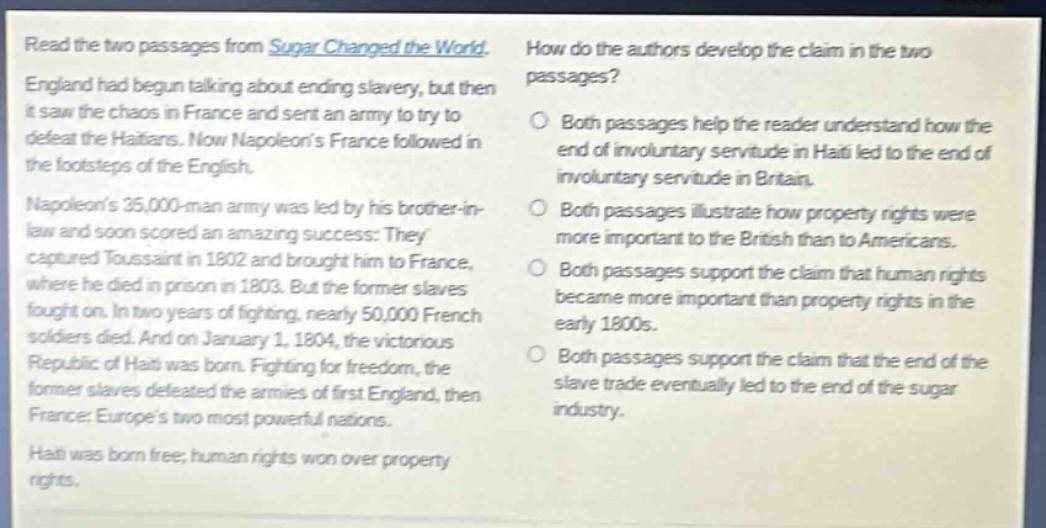
read the two passages from sugar changed the world. england had begun talking about ending slavery, but then it saw the chaos in france and sent an army to try to defeat the haitians. now napoleons france followed in the footsteps of the english. napoleons 35,000 - man army was led by his brother - in - law and soon scored an amazing success: they captured toussaint in 1802 and brought him to france, where he died in prison in 1803. but the former slaves fought on. in two years of fighting, nearly 50,000 french soldiers died. and on january 1, 1804, the victorious republic of haiti was born. fighting for freedom, the former slaves defeated the armies of first england, then france: europes two most powerful nations. haiti was born free; human rights won over property rights. how do the authors develop the claim in the two passages? both passages help the reader understand how the end of involuntary servitude in haiti led to the end of involuntary servitude in britain. both passages illustrate how property rights were more important to the british than to americans. both passages support the claim that human rights became more important than property rights in the early 1800s. both passages support the claim that the end of the slave trade eventually led to the end of the sugar industry.
Answer
Brief Explanations:
The passages discuss the Haitian fight for freedom where human - rights of former slaves triumphed over property - rights of slave - owners. It shows how in the early 1800s, human rights became more important than property rights.
Answer:
Both passages support the claim that human rights became more important than property rights in the early 1800s.