which sentences combine the ideas correctly? check all that apply. the members of the team worked well…
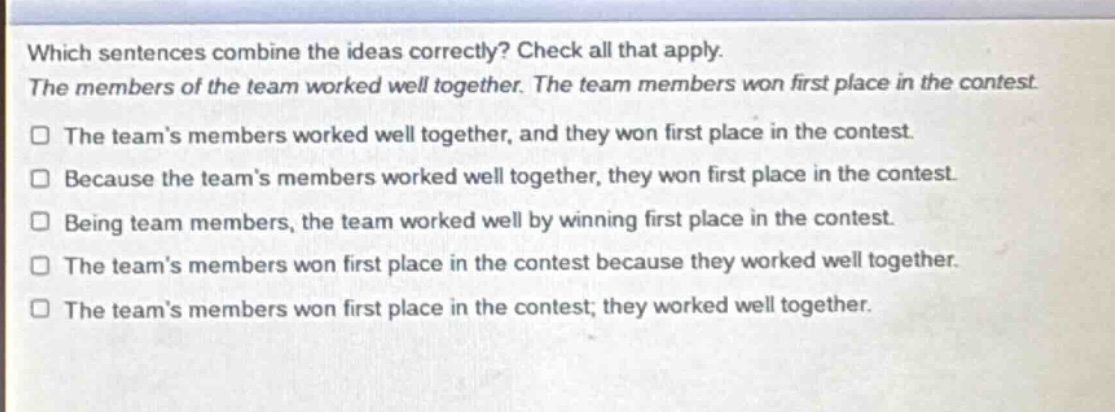
which sentences combine the ideas correctly? check all that apply. the members of the team worked well together. the team members won first place in the contest. the team’s members worked well together, and they won first place in the contest. because the team’s members worked well together, they won first place in the contest. being team members, the team worked well by winning first place in the contest. the team’s members won first place in the contest because they worked well together. the team’s members won first place in the contest; they worked well together.
Answer
Brief Explanations:
- "The team’s members worked well together, and they won first place in the contest" simply joins the two ideas with a coordinating conjunction "and", showing a connection.
- "Because the team’s members worked well together, they won first place in the contest" clearly shows a cause - and - effect relationship.
- "The team’s members won first place in the contest because they worked well together" also shows a cause - and - effect relationship.
- "Being team members, the team worked well by winning first place in the contest" has an unclear and incorrect construction as it wrongly implies being a team member is the reason for working well by winning.
- "The team’s members won first place in the contest; they worked well together" uses a semicolon to connect the two related ideas, but the cause - and - effect is not as clear as with "because". However, it still shows a connection between the two facts.
Answer:
The team’s members worked well together, and they won first place in the contest. Because the team’s members worked well together, they won first place in the contest. The team’s members won first place in the contest because they worked well together. The team’s members won first place in the contest; they worked well together.