she did not have a container in which to put the leftovers. how could a writer best revise the above…
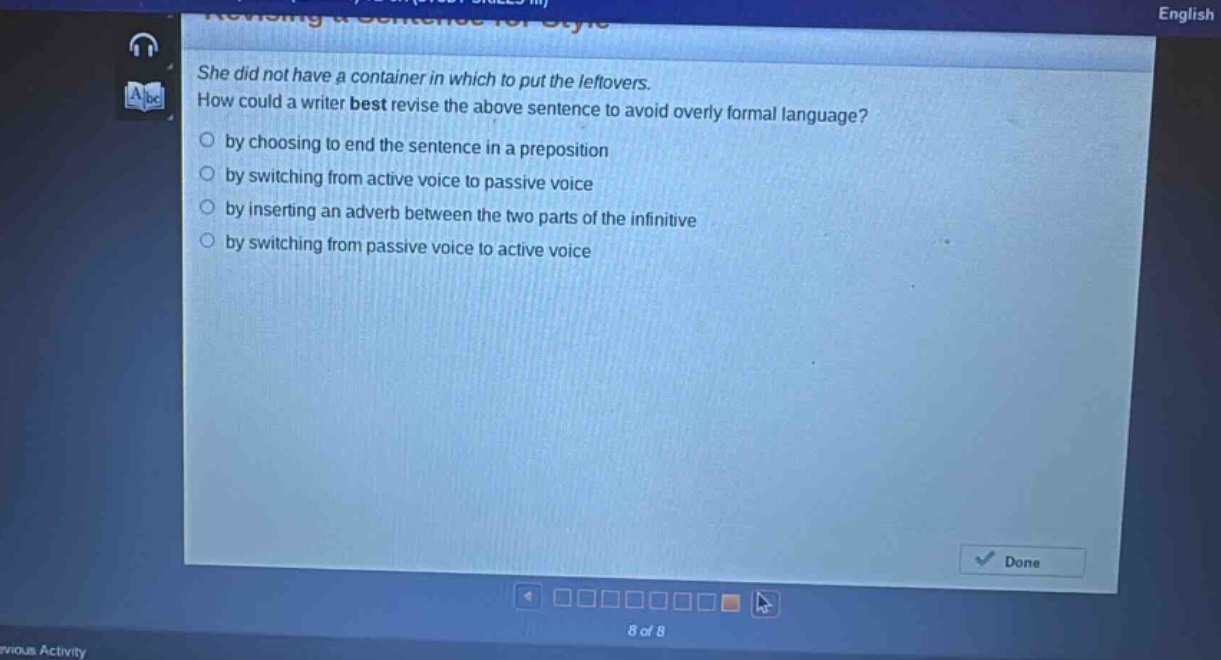
she did not have a container in which to put the leftovers. how could a writer best revise the above sentence to avoid overly formal language? by choosing to end the sentence in a preposition by switching from active voice to passive voice by inserting an adverb between the two parts of the infinitive by switching from passive voice to active voice
Answer
Brief Explanations:
Ending a sentence with a preposition is more informal in English. The original sentence "She did not have a container in which to put the leftovers" is rather formal. End - ing with a preposition can make it less formal. Switching voice or splitting an infinitive doesn't directly address the formality issue here.
Answer:
by choosing to end the sentence in a preposition