a writer should hyphenate a compound modifier that\ncontains an adverb ending in -ly.\ncomes after the noun…
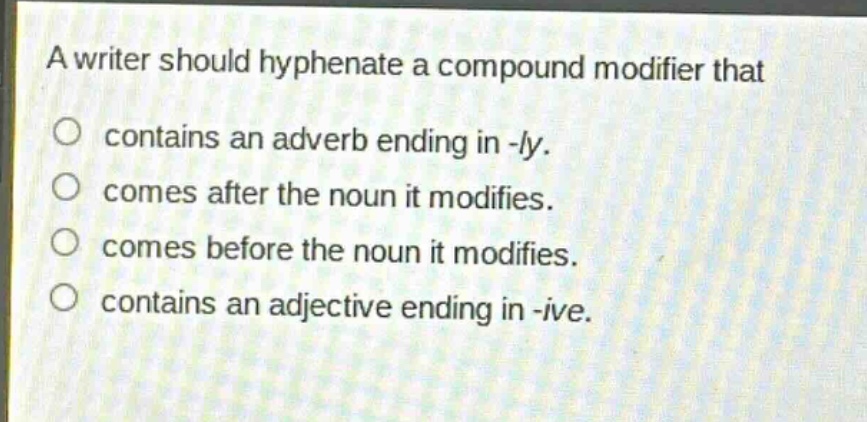
a writer should hyphenate a compound modifier that\ncontains an adverb ending in -ly.\ncomes after the noun it modifies.\ncomes before the noun it modifies.\ncontains an adjective ending in -ive.
Answer
Brief Explanations:
A compound modifier is hyphenated when it comes before the noun it modifies to clarify that the words function as a single unit modifying the noun. When it comes after the noun, the relationship is usually clear without a hyphen. A compound modifier with an -ly adverb is generally not hyphenated as -ly adverbs already clearly modify the following word. And the ending -ive of an adjective doesn't determine hyphenation of a compound modifier.
Answer:
comes before the noun it modifies.