12. where in the us is a tar pit found?\n13. what type of animal might become preserved in a tar pit?\n14…
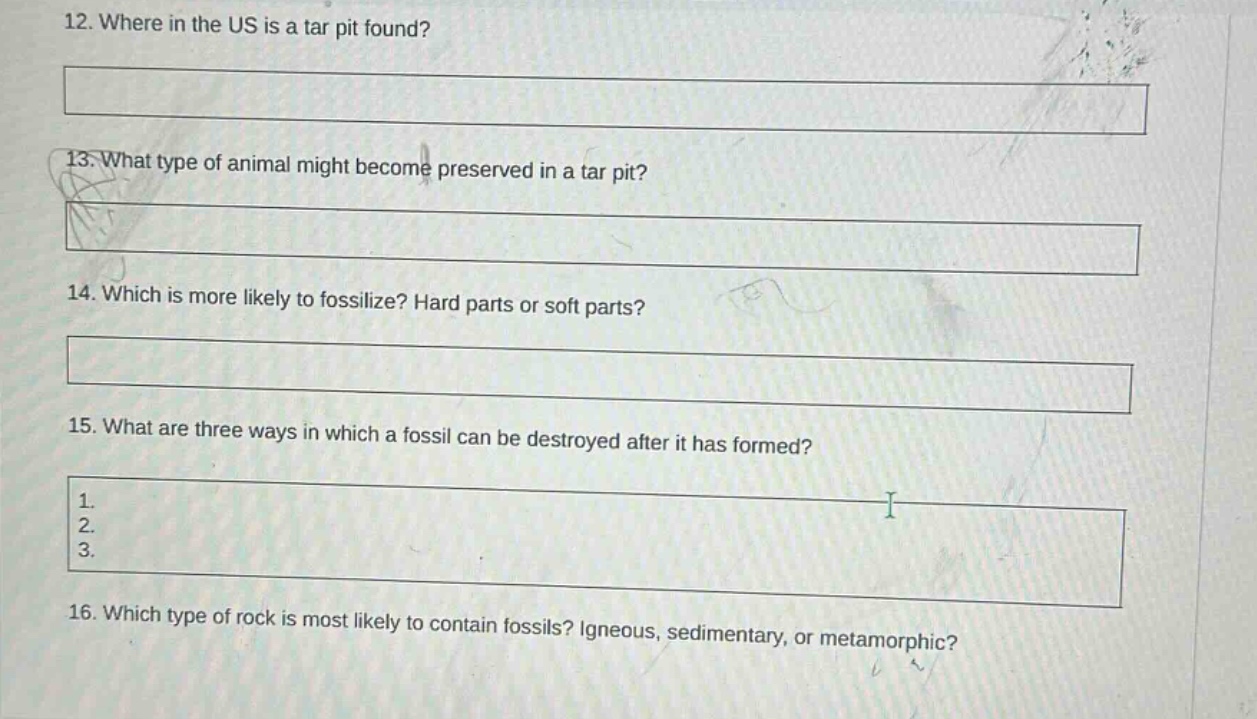
12. where in the us is a tar pit found?\n13. what type of animal might become preserved in a tar pit?\n14. which is more likely to fossilize? hard parts or soft parts?\n15. what are three ways in which a fossil can be destroyed after it has formed?\n1. \n2. \n3. \n16. which type of rock is most likely to contain fossils? igneous, sedimentary, or metamorphic?
Answer
Brief Explanations:
- The La Brea Tar Pits are well - known in Los Angeles, California. Tar pits form when natural asphalt (tar) seeps to the surface.
- Large mammals such as saber - toothed cats, dire wolves, and mammoths have been found preserved in tar pits. These animals were attracted to the area and became trapped.
- Hard parts like bones, teeth, and shells are more likely to fossilize because they are more resistant to decay compared to soft parts like organs and flesh.
- Erosion can wear away the rock containing fossils. Metamorphism can change the rock and destroy the fossil due to high heat and pressure. Weathering can break down the rock and fossil over time.
- Sedimentary rock is most likely to contain fossils. Igneous rocks form from the cooling of magma or lava and would destroy any organic material. Metamorphic rocks are formed from pre - existing rocks under high heat and pressure, which also usually destroys fossils.
Answer:
- Los Angeles, California
- Large mammals (e.g., saber - toothed cats, dire wolves, mammoths)
- Hard parts
-
- Erosion
- Metamorphism
- Weathering
- Sedimentary