13. which ethical principle involves avoiding harm and preventing negative consequences in genetic…
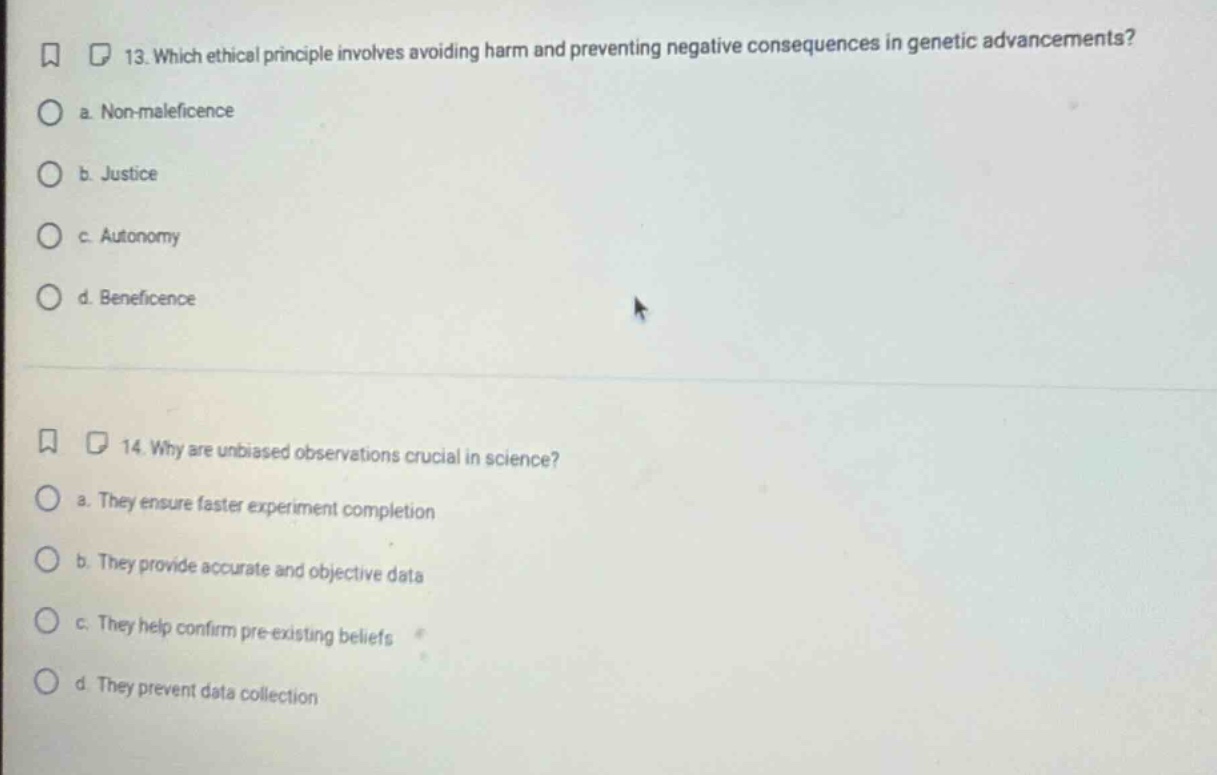
13. which ethical principle involves avoiding harm and preventing negative consequences in genetic advancements? a. non - maleficence b. justice c. autonomy d. beneficence 14. why are unbiased observations crucial in science? a. they ensure faster experiment completion b. they provide accurate and objective data c. they help confirm pre - existing beliefs d. they prevent data collection
Answer
Brief Explanations:
- Non - maleficence is the ethical principle that focuses on avoiding harm. In genetic advancements, it means preventing negative consequences. Justice is about fairness, autonomy is about self - determination, and beneficence is about doing good.
- Unbiased observations are crucial in science because they provide accurate and objective data. Faster experiment completion is not the main reason. They do not help confirm pre - existing beliefs as science aims for objectivity, and they do not prevent data collection.
Answer:
- a. Non - maleficence
- b. They provide accurate and objective data