13\nfor many years, scientists hypothesized that the rocky material of the moon held very little water. in…
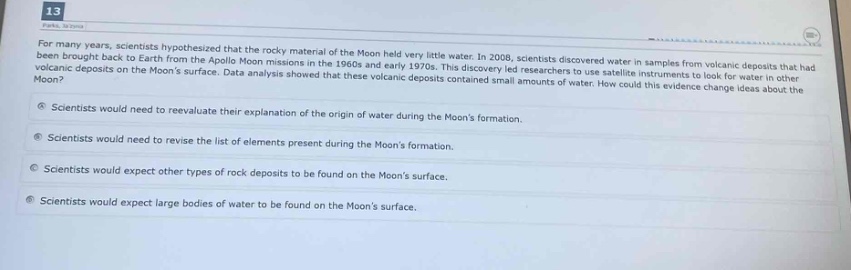
13\nfor many years, scientists hypothesized that the rocky material of the moon held very little water. in 2008, scientists discovered water in samples from volcanic deposits that had been brought back to earth from the apollo moon missions in the 1960s and early 1970s. this discovery led researchers to use satellite instruments to look for water in other volcanic deposits on the moons surface. data analysis showed that these volcanic deposits contained small amounts of water. how could this evidence change ideas about the moon?\n- scientists would need to reevaluate their explanation of the origin of water during the moons formation.\n- scientists would need to revise the list of elements present during the moons formation.\n- scientists would expect other types of rock deposits to be found on the moons surface.\n- scientists would expect large bodies of water to be found on the moons surface.
Answer
Brief Explanations:
The discovery of water in Moon's volcanic deposits challenges the previous hypothesis of little water in the Moon's rocky material. This would require re - evaluating the origin of water during the Moon's formation as the new evidence changes the understanding of water presence at that time. The other options are not directly related to the impact of this water discovery on the Moon's formation ideas.
Answer:
Scientists would need to reevaluate their explanation of the origin of water during the Moon's formation.