21. what era is known as the \age of invertebrates\?\n- a) precambrian\n- b) paleozoic\n- c) mesozoic\n- d)…
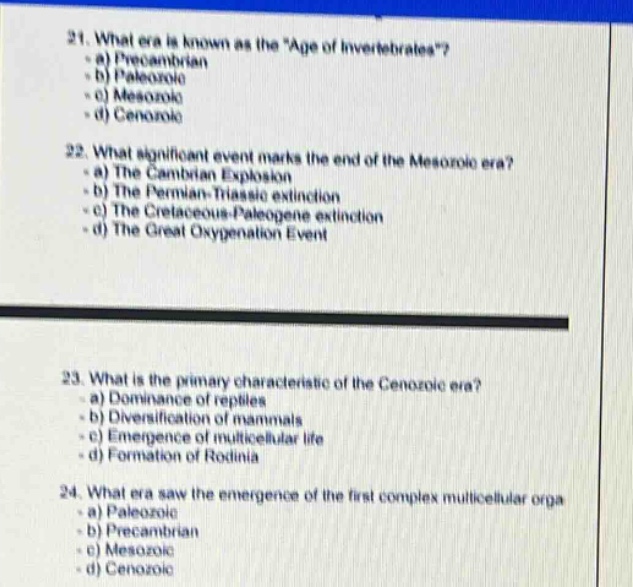
21. what era is known as the \age of invertebrates\?\n- a) precambrian\n- b) paleozoic\n- c) mesozoic\n- d) cenozoic\n22. what significant event marks the end of the mesozoic era?\n- a) the cambrian explosion\n- b) the permian - triassic extinction\n- c) the cretaceous - paleogene extinction\n- d) the great oxygenation event\n23. what is the primary characteristic of the cenozoic era?\n- a) dominance of reptiles\n- b) diversification of mammals\n- c) emergence of multicellular life\n- d) formation of rodinia\n24. what era saw the emergence of the first complex multicellular organisms?\n- a) paleozoic\n- b) precambrian\n- c) mesozoic\n- d) cenozoic
Answer
Brief Explanations:
- The Paleozoic era is known as the "Age of Invertebrates" as it saw a great diversification of invertebrate life - forms.
- The Cretaceous - Paleogene extinction event marks the end of the Mesozoic era, which led to the extinction of the dinosaurs.
- The primary characteristic of the Cenozoic era is the diversification of mammals, which became the dominant land animals after the extinction of dinosaurs.
- The Precambrian era saw the emergence of the first complex multicellular organisms.
Answer:
- b) Paleozoic
- c) The Cretaceous - Paleogene extinction
- b) Diversification of mammals
- b) Precambrian