23. what is the best title for this list? * ability to hold large amount of water * double rows of eyelashes…
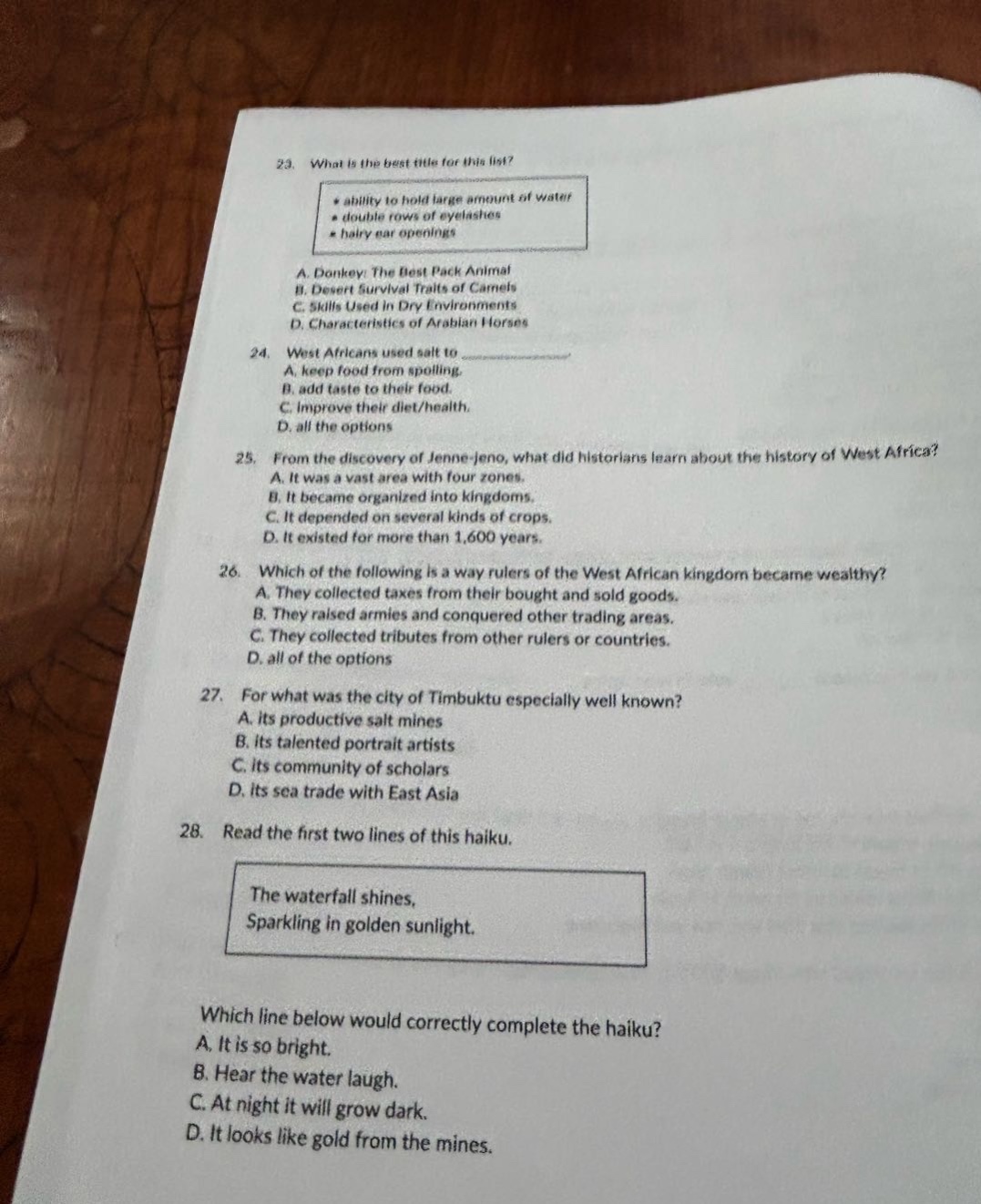
23. what is the best title for this list? * ability to hold large amount of water * double rows of eyelashes * hairy ear openings a. donkey: the best pack animal b. desert survival traits of camels c. skills used in dry environments d. characteristics of arabian horses 24. west africans used salt to a. keep food from spoiling. b. add taste to their food. c. improve their diet/health. d. all the options 25. from the discovery of jenne - jeno, what did historians learn about the history of west africa? a. it was a vast area with four zones. b. it became organized into kingdoms. c. it depended on several kinds of crops. d. it existed for more than 1,600 years. 26. which of the following is a way rulers of the west african kingdom became wealthy? a. they collected taxes from their bought and sold goods. b. they raised armies and conquered other trading areas. c. they collected tributes from other rulers or countries. d. all of the options 27. for what was the city of timbuktu especially well known? a. its productive salt mines b. its talented portrait artists c. its community of scholars d. its sea trade with east asia 28. read the first two lines of this haiku. the waterfall shines, sparkling in golden sunlight. which line below would correctly complete the haiku? a. it is so bright. b. hear the water laugh. c. at night it will grow dark. d. it looks like gold from the mines.
Answer
Brief Explanations:
- The traits listed (ability to hold large - amount of water, double rows of eyelashes, hairy ear openings) are survival traits of camels in the desert.
- West Africans used salt to preserve food, add taste, and improve diet/health.
- The discovery of Jenné -jeno showed that West Africa became organized into kingdoms.
- Rulers of West African kingdoms became wealthy through collecting taxes, conquering trading areas, and collecting tributes.
- Timbuktu was well - known for its community of scholars.
- A haiku has a 5 - 7 - 5 syllable structure. "Hear the water laugh" has 5 syllables and fits the theme.
Answer:
- B. Desert Survival Traits of Camels
- D. all the options
- B. It became organized into kingdoms.
- D. all of the options
- C. its community of scholars
- B. Hear the water laugh.