56 multiple choice 1 point\nthe ________ growth pattern that occurs when a population reaches carrying…
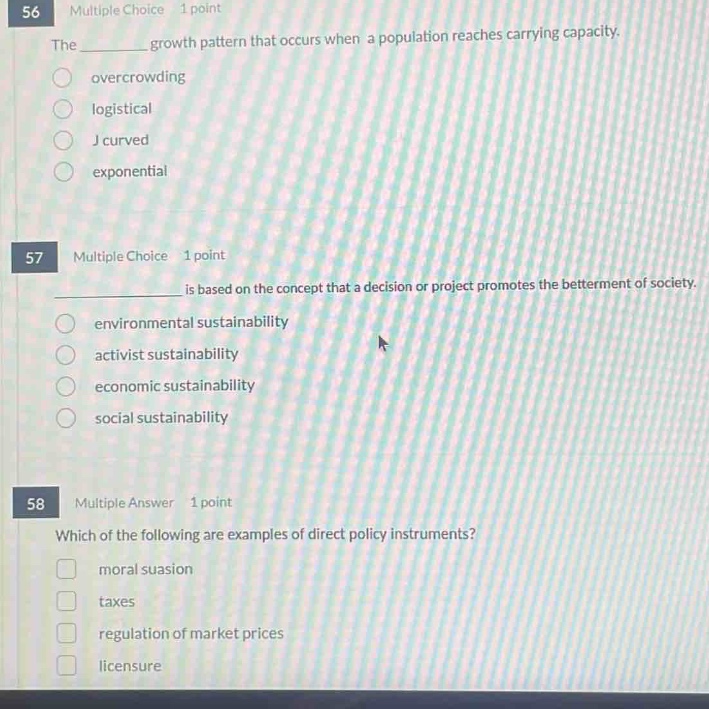
56 multiple choice 1 point\nthe ________ growth pattern that occurs when a population reaches carrying capacity.\novercrowding\nlogistical\nj - curved\nexponential\n\n57 multiple choice 1 point\n________ is based on the concept that a decision or project promotes the betterment of society.\nenvironmental sustainability\nactivist sustainability\neconomic sustainability\nsocial sustainability\n\n58 multiple answer 1 point\nwhich of the following are examples of direct policy instruments?\nmoral suasion\ntaxes\nregulation of market prices\nlicensure
Answer
Brief Explanations:
Question 56:
When a population reaches its carrying - capacity, the growth pattern is logistic. Logistic growth has an S - shaped curve where growth slows as the population approaches the carrying capacity due to limited resources.
Question 57:
Social sustainability is based on the concept that a decision or project promotes the betterment of society, considering aspects like equity, well - being, and social justice.
Question 58:
Direct policy instruments are those that directly influence economic or social behavior. Taxes, regulation of market prices, and licensure are direct as they directly affect actions of individuals or firms. Moral suasion is more of an indirect influence through persuasion rather than a direct regulatory or economic measure.