absolute dating of a rock layer with fossils yielded an age of 75 million years. however, a rock layer below…
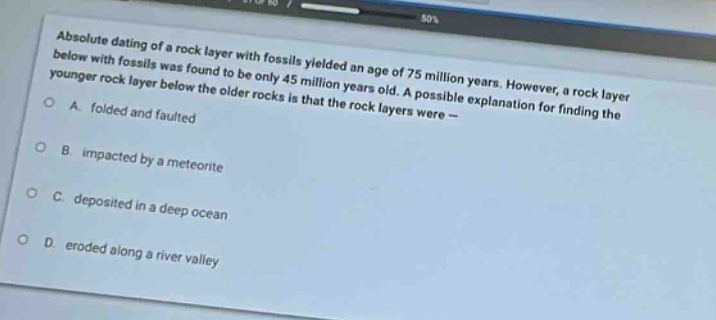
absolute dating of a rock layer with fossils yielded an age of 75 million years. however, a rock layer below with fossils was found to be only 45 million years old. a possible explanation for finding the younger rock layer below the older rocks is that the rock layers were –\na. folded and faulted\nb. impacted by a meteorite\nc. deposited in a deep ocean\nd. eroded along a river valley
Answer
Answer:
A. folded and faulted
Brief Explanation:
Folding and faulting can disrupt normal rock - layer order, causing younger rock layers to be below older ones. Impact by a meteorite, deep - ocean deposition, and river - valley erosion don't typically result in younger rocks being beneath older ones in this way.