across\n1 sedimentary rock formed from sand deposits. (9)\n3 the kind of rock that you are most likely to…
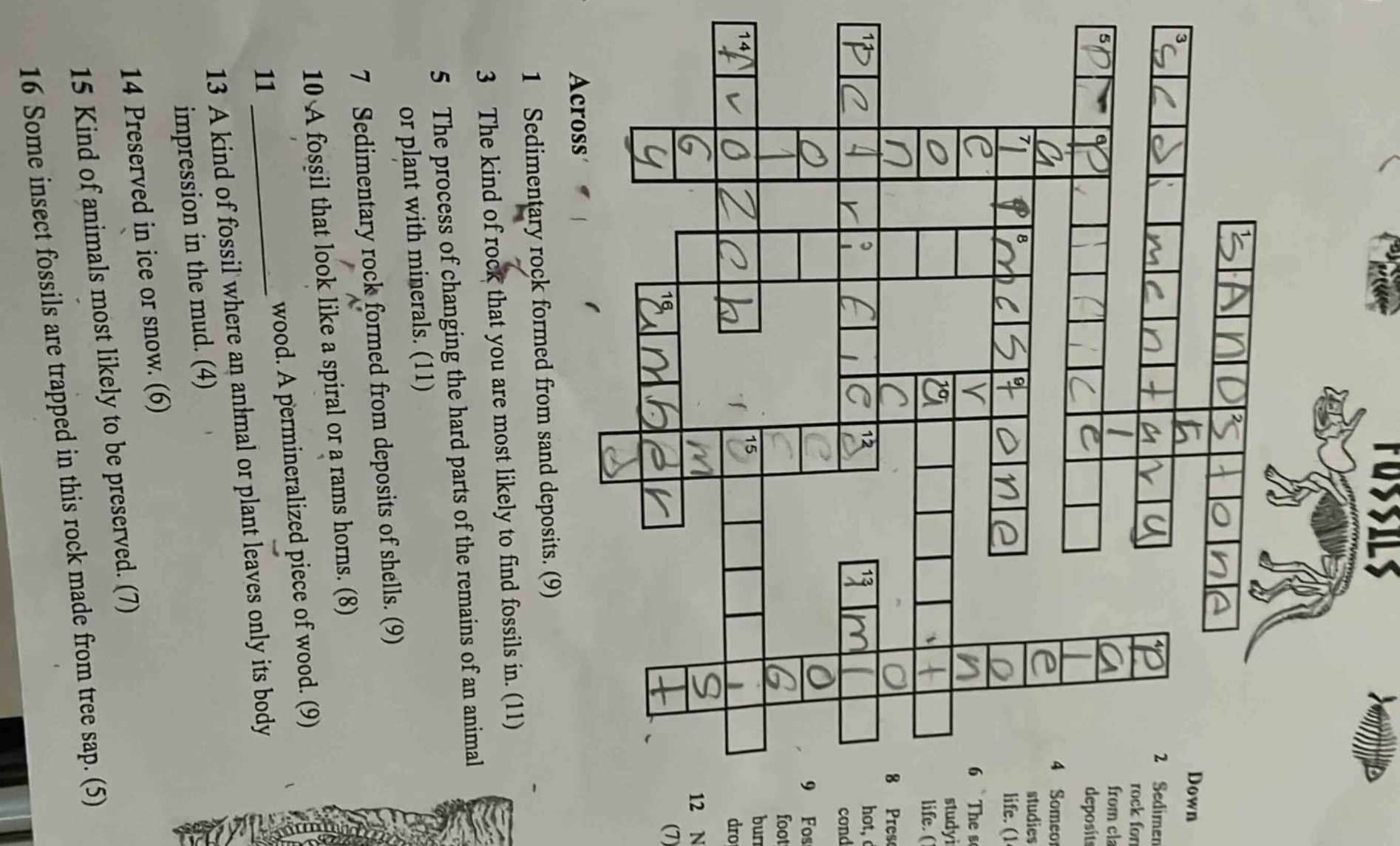
across\n1 sedimentary rock formed from sand deposits. (9)\n3 the kind of rock that you are most likely to find fossils in. (11)\n5 the process of changing the hard parts of the remains of an animal or plant with minerals. (11)\n7 sedimentary rock formed from deposits of shells.\n10 a fossil that look like a spiral or a rams horns. (8)\n11 a kind of fossil where an animal or plant leaves only its body impression in the mud. (4)\n13 preserved in ice or snow. (6)\n14 kind of animals most likely to be preserved. (7)\n15 some insect fossils are trapped in this rock made from tree sap. (5)\ndown\n2 sediment\n4 from clay\n6 some studies life.\n8 the studies life.\n9 preserved hot, conditions\n12 fossil foot
Answer
Brief Explanations:
Este es un crucigrama relacionado con los conceptos de fósiles y rocas sedimentarias. Cada clue se corresponde con una palabra que se escribe en el crucigrama de manera que las letras coincidan en las intersecciones.
Answer:
No se puede proporcionar la solución completa del crucigrama sin más ayuda visual o texto detallado para confirmar las respuestas, pero se basa en conocimientos de ciencias naturales (geología en este caso, ya que se tratan de rocas y fósiles).