an auto - parts store offers a fuel additive that claims to increase a vehicles gas mileage. the additive is…
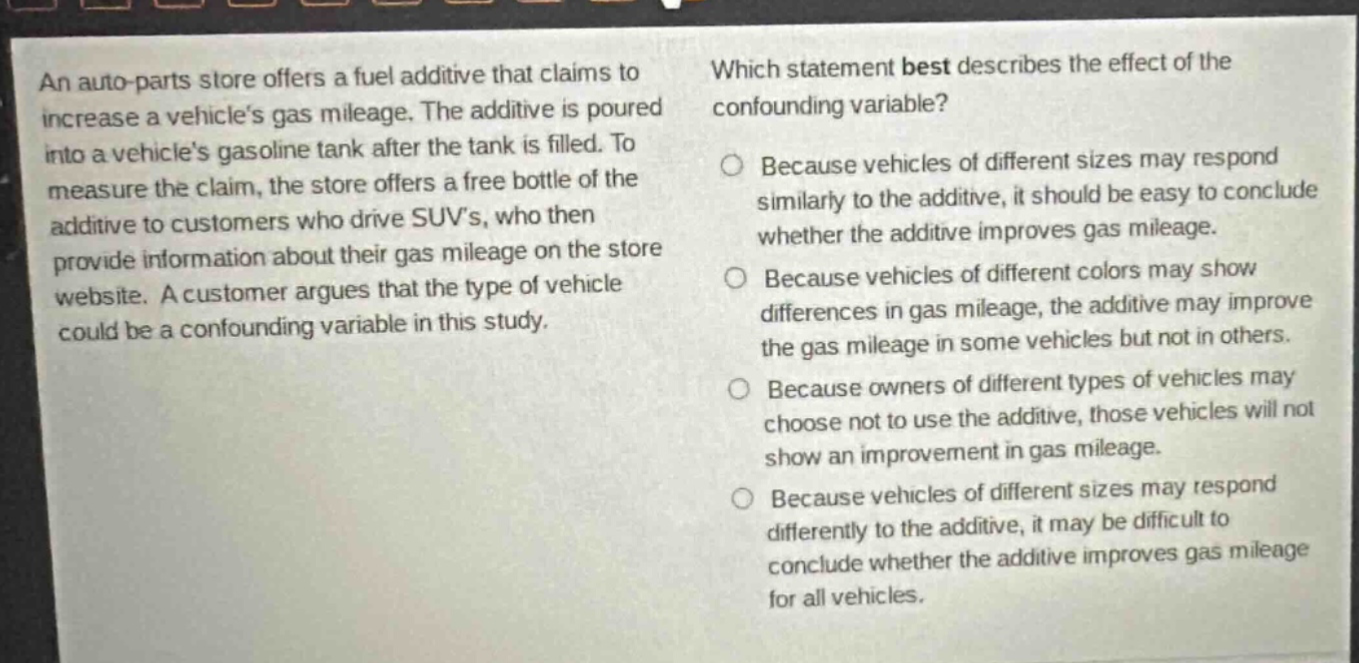
an auto - parts store offers a fuel additive that claims to increase a vehicles gas mileage. the additive is poured into a vehicles gasoline tank after the tank is filled. to measure the claim, the store offers a free bottle of the additive to customers who drive suvs, who then provide information about their gas mileage on the store website. a customer argues that the type of vehicle could be a confounding variable in this study. which statement best describes the effect of the confounding variable? because vehicles of different sizes may respond similarly to the additive, it should be easy to conclude whether the additive improves gas mileage. because vehicles of different colors may show differences in gas mileage, the additive may improve the gas mileage in some vehicles but not in others. because owners of different types of vehicles may choose not to use the additive, those vehicles will not show an improvement in gas mileage. because vehicles of different sizes may respond differently to the additive, it may be difficult to conclude whether the additive improves gas mileage for all vehicles.
Answer
Answer:
Because vehicles of different sizes may respond differently to the additive, it may be difficult to conclude whether the additive improves gas mileage for all vehicles.
Brief Explanations:
A confounding variable affects the relationship between independent (additive) and dependent (gas - mileage) variables. Vehicle size can impact gas - mileage and response to additive, complicating conclusions.