at certain points along the ocean floor, areas of spreading occur, creating mid - ocean ridges. along these…
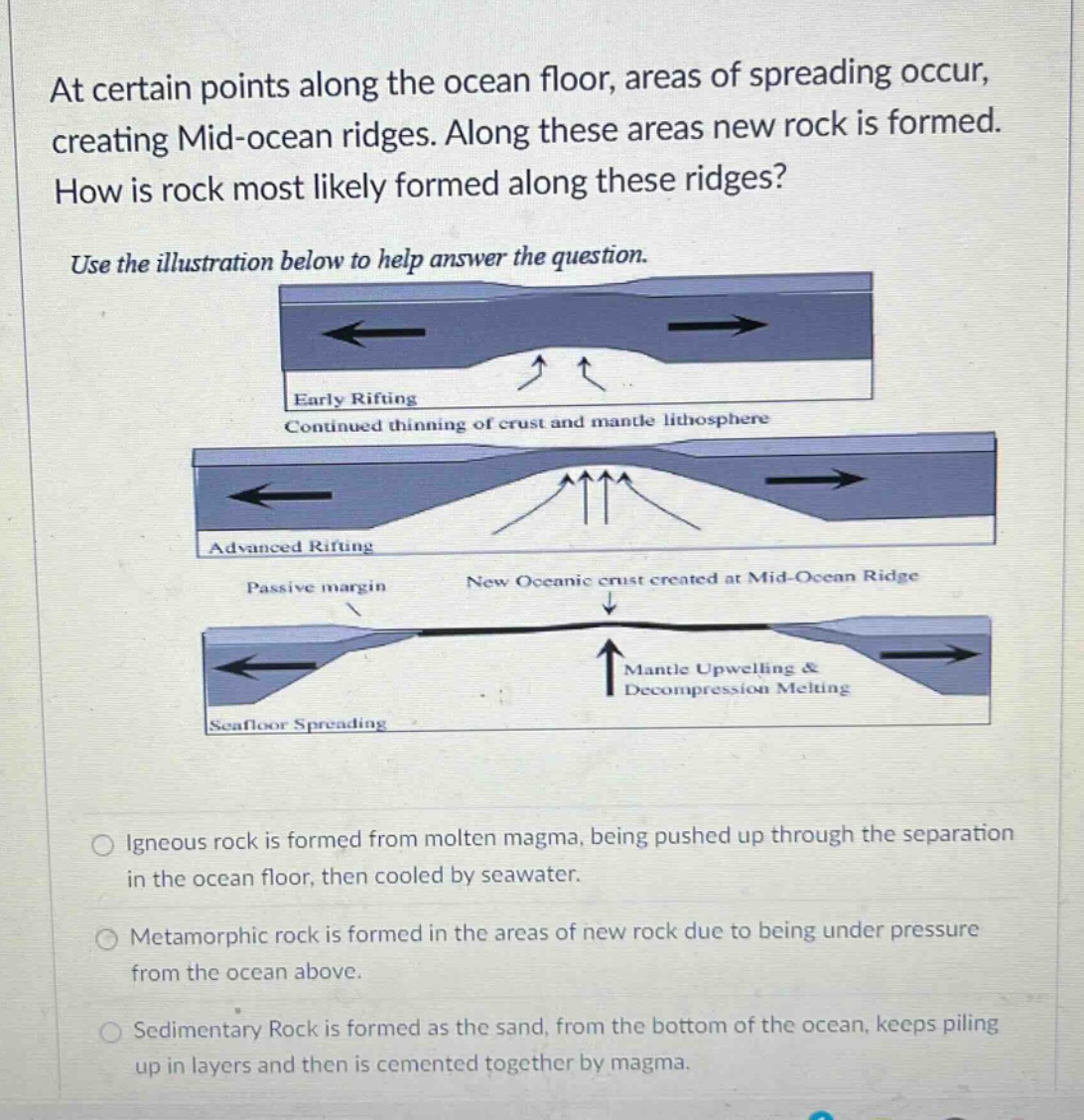
at certain points along the ocean floor, areas of spreading occur, creating mid - ocean ridges. along these areas new rock is formed. how is rock most likely formed along these ridges? use the illustration below to help answer the question. early rifting continued thinning of crust and mantle lithosphere advanced rifting passive margin new oceanic crust created at mid - ocean ridge mantle upwelling & decompression melting seafloor spreading igneous rock is formed from molten magma, being pushed up through the separation in the ocean floor, then cooled by seawater. metamorphic rock is formed in the areas of new rock due to being under pressure from the ocean above. sedimentary rock is formed as the sand, from the bottom of the ocean, keeps piling up in layers and then is cemented together by magma.
Answer
Brief Explanations:
At mid - ocean ridges, mantle upwelling and decompression melting occur. Molten magma rises through the separation in the ocean floor. When this magma comes in contact with cold seawater, it cools and solidifies to form igneous rock. Metamorphic rock forms due to heat and pressure under existing rock conditions, not the main process here. Sedimentary rock forms from the compaction and cementation of sediments, not in this context of new rock formation at mid - ocean ridges.
Answer:
Igneous rock is formed from molten magma, being pushed up through the separation in the ocean floor, then cooled by seawater.