challenging misperceptions\nmisperceptions are ideas or opinions people believe to be true, but that are…
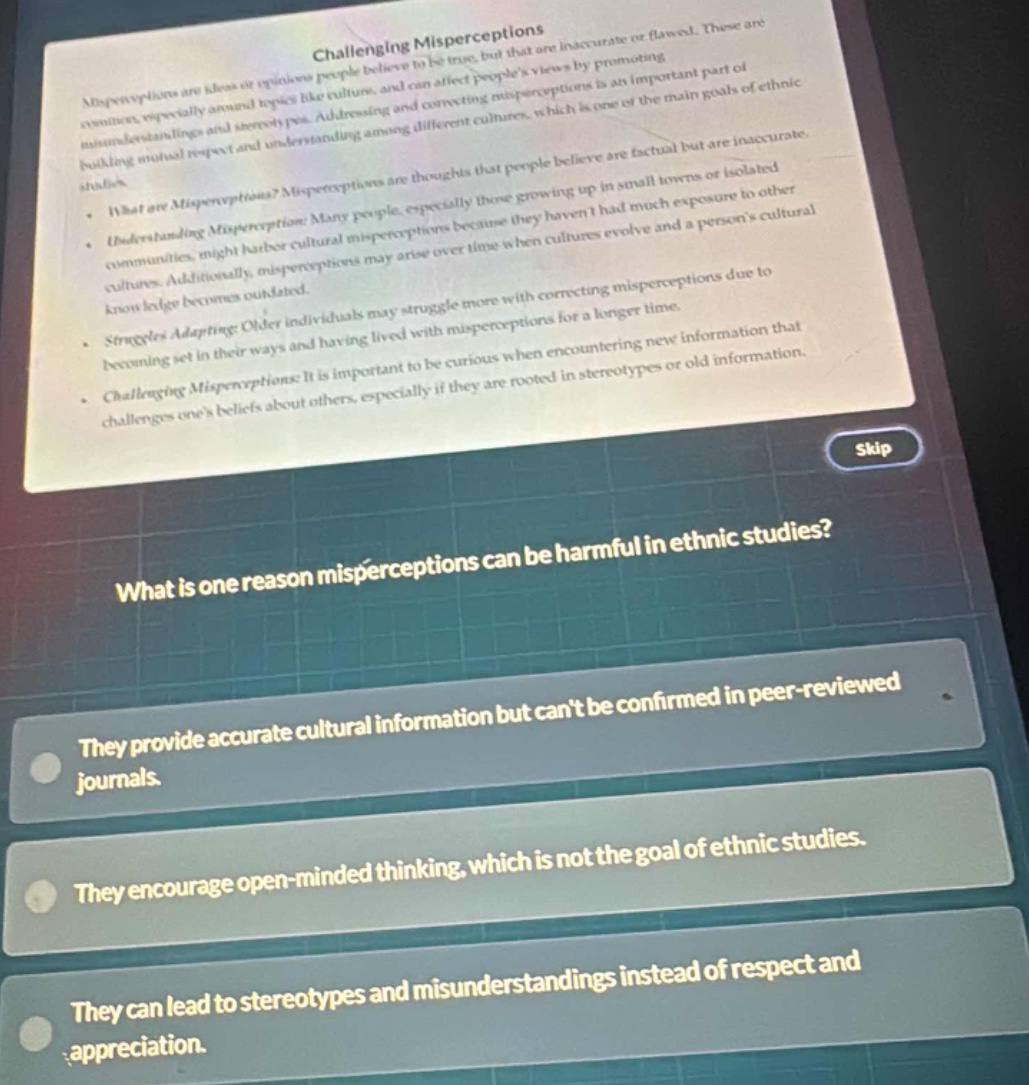
challenging misperceptions\nmisperceptions are ideas or opinions people believe to be true, but that are inaccurate or flawed. these are common, especially around topics like cultures, and can affect peoples views by promoting misunderstandings and stereotypes. addressing and correcting misperceptions is an important part of building mutual respect and understanding among different cultures, which is one of the main goals of ethnic studies.\n- what are misperceptions? misperceptions are thoughts that people believe are factual but are inaccurate.\n- understanding misperceptions: many people, especially those growing up in small towns or isolated communities, might harbor cultural misperceptions because they havent had much exposure to other cultures. additionally, misperceptions may arise over time when cultures evolve and a persons cultural knowledge becomes outdated.\n- struggles adapting: older individuals may struggle more with correcting misperceptions due to becoming set in their ways and having lived with misperceptions for a longer time.\n- challenging misperceptions: it is important to be curious when encountering new information that challenges ones beliefs about others, especially if they are rooted in stereotypes or old information.\nwhat is one reason misperceptions can be harmful in ethnic studies?\nthey provide accurate cultural information but cant be confirmed in peer - reviewed journals.\nthey encourage open - minded thinking, which is not the goal of ethnic studies.\nthey can lead to stereotypes and misunderstandings instead of respect and appreciation.
Answer
Brief Explanations:
Ethnic studies aims to build mutual respect and understanding among different cultures. Misperceptions are inaccurate and can lead to stereotypes and misunderstandings, which go against the goals of ethnic studies.
Answer:
They can lead to stereotypes and misunderstandings instead of respect and appreciation.