characteristics of multimedia and digital texts\noverview of archaeology\narchaeology is the study of the…
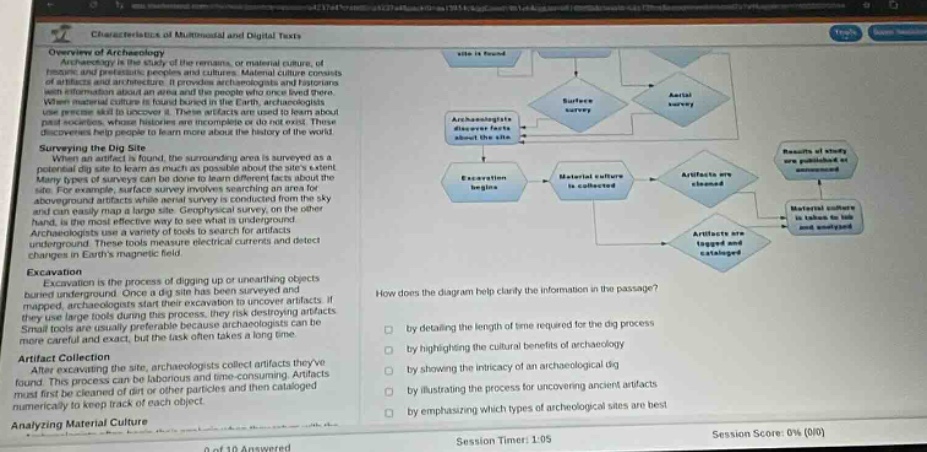
characteristics of multimedia and digital texts\noverview of archaeology\narchaeology is the study of the remains, or material culture, of ancient and prehistoric peoples and cultures. material culture consists of artifacts and architecture. archaeologists study material culture to learn information about an area and the people who once lived there. when material culture is found buried in the earth, archaeologists must carefully dig up the artifacts to avoid destroying these past societies, whose histories are incomplete or do not exist. these discoveries help people to learn more about the history of the world.\nsurveying the site\nwhen an artifact is found, the surrounding area is surveyed as a possible archaeological site. many types of surveys are done to learn different facts about the site. for example, surface surveys search an area for above - ground artifacts while aerial surveys are conducted from the sky to look for signs of buried artifacts. ground - penetrating radar, on the other hand, is the most effective way to see what is underground. archaeologists use a variety of tools to search for artifacts underground. these tools measure electrical currents and detect changes in earths magnetic field.\nexcavation\nexcavation is the process of digging up and unearthing objects buried underground. once a dig site has been surveyed and mapped, archaeologists start their excavation to uncover artifacts. if they use large tools during this process, they risk destroying artifacts. small tools are usually preferable because archaeologists can be more careful and exact, but the task often takes a long time.\nartifact collection\nafter excavating the site, archaeologists collect artifacts theyve found. once the artifacts can be labored and time - consuming. artifacts must first be cleaned of dirt or other particles and then cataloged numerically to keep track of each object.\nanalyzing material culture\nhow does the diagram help clarify the information in the passage?\n□ by detailing the length of time required for the dig process\n□ by highlighting the cultural benefits of archaeology\n□ by showing the intricacy of an archaeological dig\n□ by illustrating the process for uncovering ancient artifacts\n□ by emphasizing which types of archaeological sites are best\n0 of 10 answered\nsession timer: 1:05\nsession score: 0% (0/0)
Answer
Brief Explanation:
The diagram shows the steps in archaeological work from site - discovery to artifact cataloging, emphasizing the process for uncovering ancient artifacts. It doesn't focus on dig - time length, cultural benefits, or just the intricacy of the dig.
Answer:
by emphasizing which types of archaeological sites are best