1. clocking in for a friend\nyour coworker asks you to clock them in because they are running late. no one…
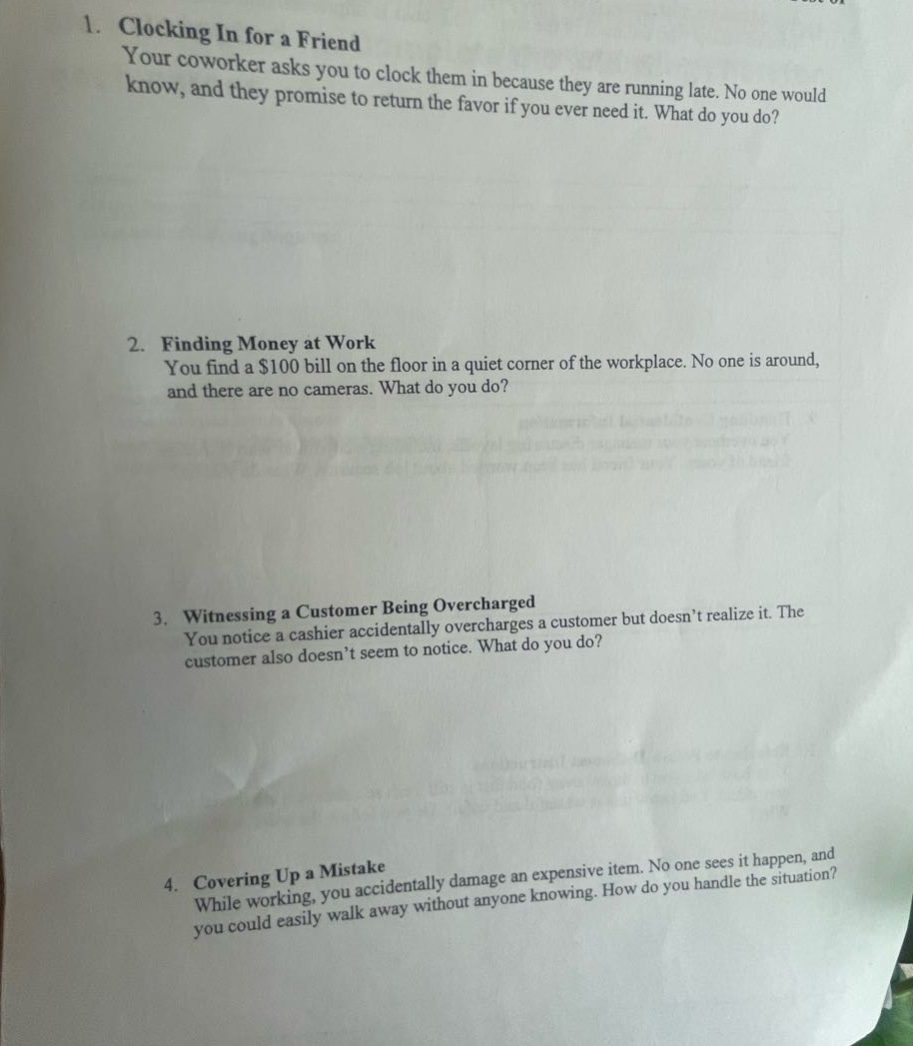
1. clocking in for a friend\nyour coworker asks you to clock them in because they are running late. no one would know, and they promise to return the favor if you ever need it. what do you do?\n\n2. finding money at work\nyou find a $100 bill on the floor in a quiet corner of the workplace. no one is around, and there are no cameras. what do you do?\n\n3. witnessing a customer being overcharged\nyou notice a cashier accidentally overcharges a customer but doesnt realize it. the customer also doesnt seem to notice. what do you do?\n\n4. covering up a mistake\nwhile working, you accidentally damage an expensive item. no one sees it happen, and you could easily walk away without anyone knowing. how do you handle the situation?
Answer
Answer:
- Politely decline your coworker's request. It is unethical and against company - timekeeping policies to clock in for someone else. This can lead to issues like unfair pay and disciplinary action.
- Report the found money to your supervisor or the appropriate authority in the workplace. It is the ethical thing to do in case it belongs to a coworker or the company.
- Inform the cashier about the over - charge and suggest they correct the error and refund the customer. This upholds honesty and good customer service.
- Report the damage to your supervisor immediately. Hiding the mistake is unethical and may cause more problems if discovered later.
Brief Explanations:
These answers are based on ethical principles in a work environment, such as honesty, integrity, and following company policies. Each situation requires an action that maintains moral and professional standards.