3. describe two class evidence characteristics and one individual evidence characteristic of the cartridge…
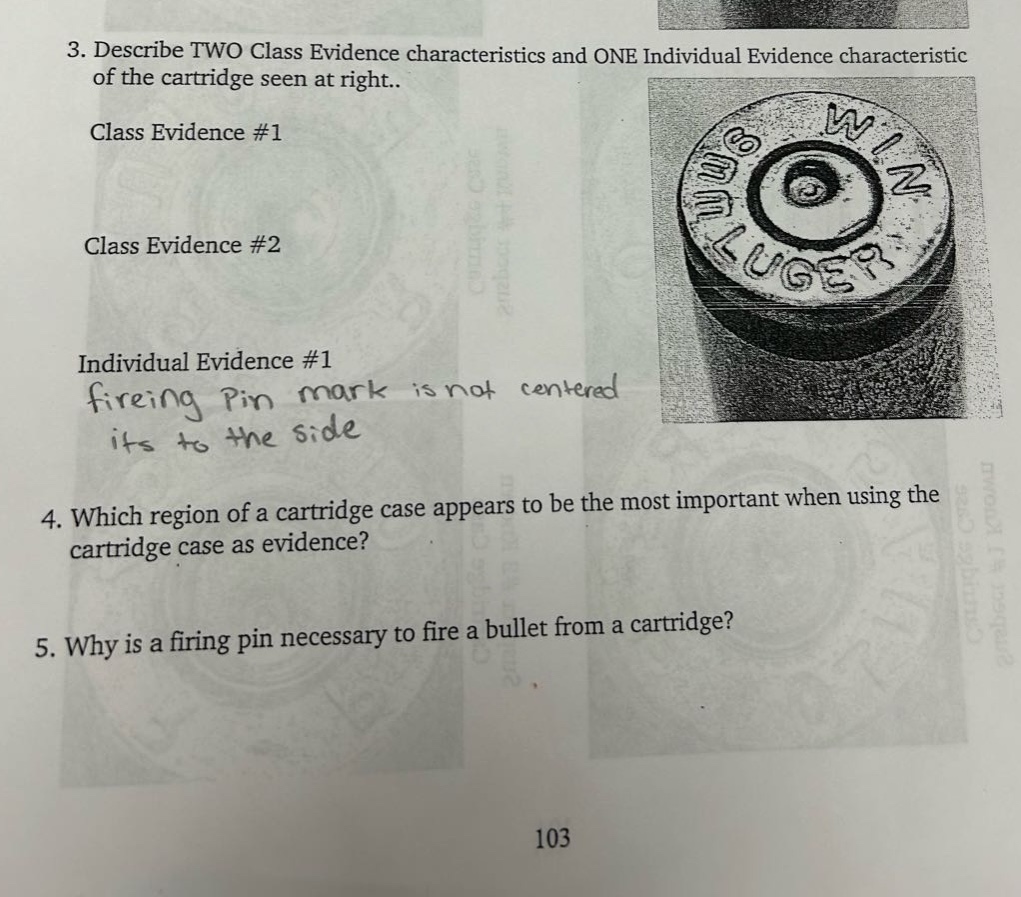
3. describe two class evidence characteristics and one individual evidence characteristic of the cartridge seen at right..\nclass evidence #1\nclass evidence #2\nindividual evidence #1 firing pin mark is not centered its to the side\n4. which region of a cartridge case appears to be the most important when using the cartridge case as evidence?\n5. why is a firing pin necessary to fire a bullet from a cartridge?
Answer
Brief Explanations:
For question 3, class evidence characteristics relate to features common to a group of items, while individual evidence is unique to a single source. For question 4, the region with unique markings from firearm interaction is critical. For question 5, the firing pin's role in initiating ignition is essential.
Answer:
Class Evidence #1: Caliber (e.g., 9mm indicated on the cartridge, identifying a general weapon type).
Class Evidence #2: Cartridge type/manufacturer markings (e.g., "Luger" stamp, indicating a specific cartridge design).
Individual Evidence #1: Off-center firing pin mark (unique to the specific firearm due to firing pin position or wear).
The base of the cartridge case, where firing pin marks and breech face impressions occur, as these unique markings can link it to a specific firearm.
A firing pin is necessary to strike the cartridge's primer, igniting the gunpowder and generating the force to propel the bullet.