determine if the following statement is true or false. a valid argument may have a false conclusion. is the…
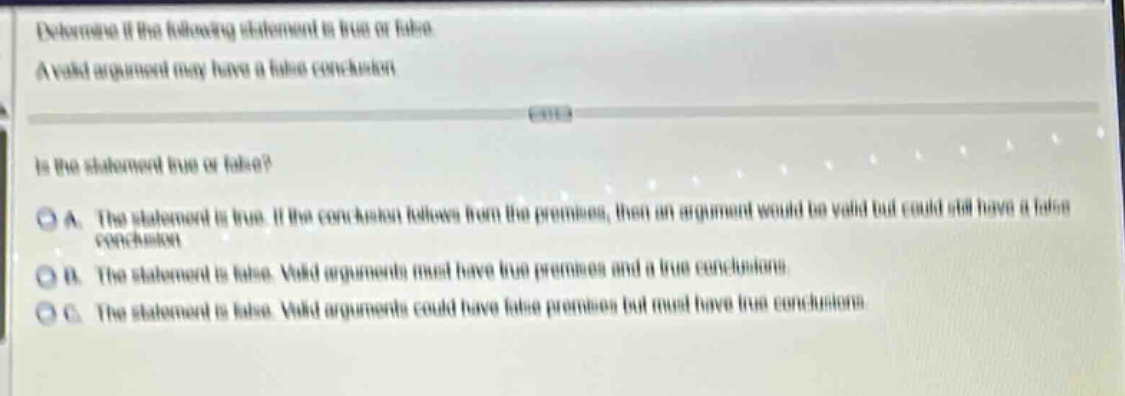
determine if the following statement is true or false. a valid argument may have a false conclusion. is the statement true or false? a. the statement is true. if the conclusion follows from the premises, then an argument would be valid but could still have a false conclusion. b. the statement is false. valid arguments must have true premises and a true conclusion. c. the statement is false. valid arguments could have false premises but must have true conclusions.
Answer
Brief Explanations:
A valid argument is one where the conclusion logically follows from the premises. It is possible for the premises to be false, and thus the conclusion can also be false even though the argument's logical structure is valid.
Answer:
A. The statement is true. If the conclusion follows from the premises, then an argument would be valid but could still have a false conclusion.