the diagram shows the layers of a rock with different fossils in it. the fossil type d is an index fossil…
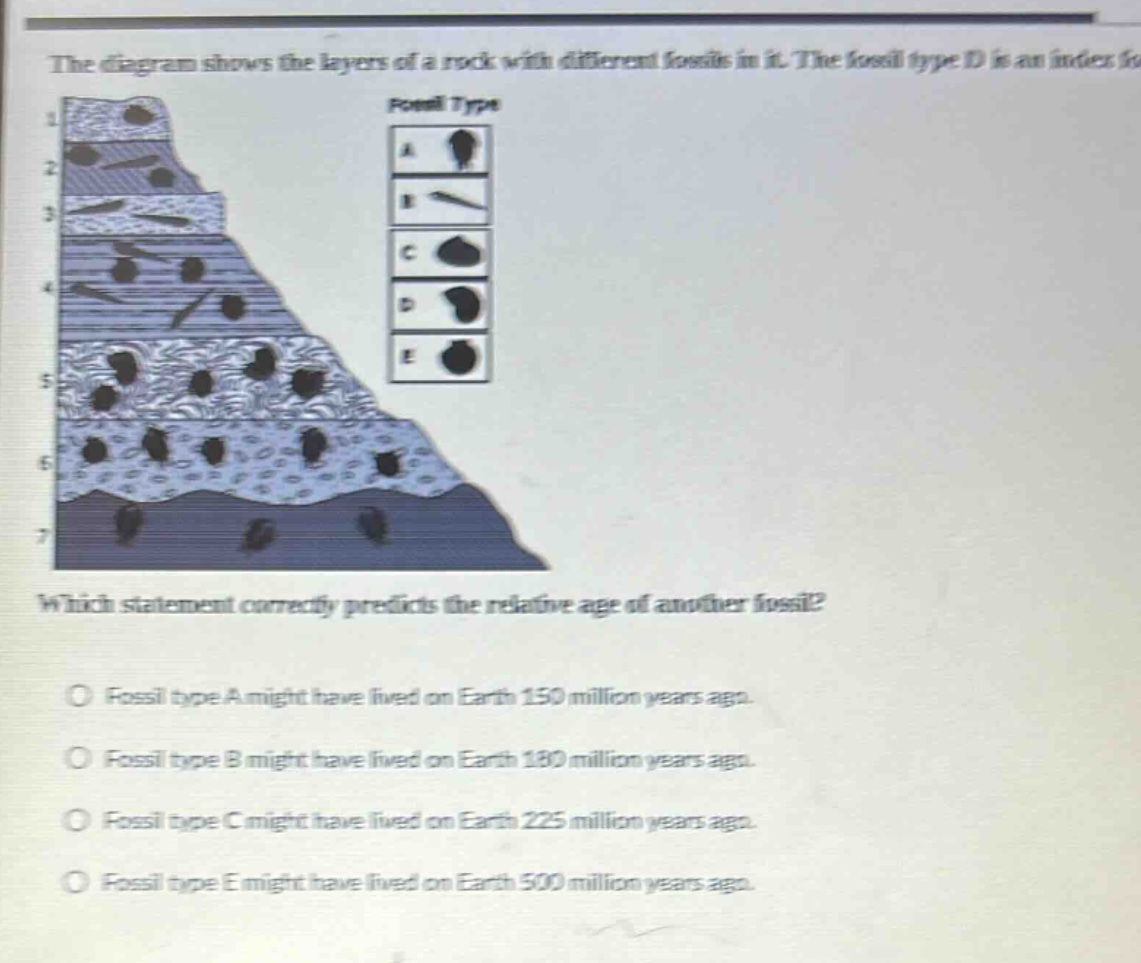
the diagram shows the layers of a rock with different fossils in it. the fossil type d is an index fossil. which statement correctly predicts the relative age of another fossil? fossil type a might have lived on earth 150 million years ago. fossil type b might have lived on earth 180 million years ago. fossil type c might have lived on earth 225 million years ago. fossil type e might have lived on earth 500 million years ago.
Answer
Brief Explanations:
In rock - layer fossils, lower layers generally contain older fossils. Index fossils help in relative - age determination. Fossil type D is an index fossil. Fossil type E is in a lower layer than D, so it is older. Since no specific age range for D is given, but based on the principle of superposition, the lower the layer, the older the fossil. Fossil type E being in a deeper layer is likely to be the oldest among the options presented.
Answer:
Fossil type E might have lived on Earth 500 million years ago.