what is the difference between movement and rhythm?\na. movement is the sense of motion created often…
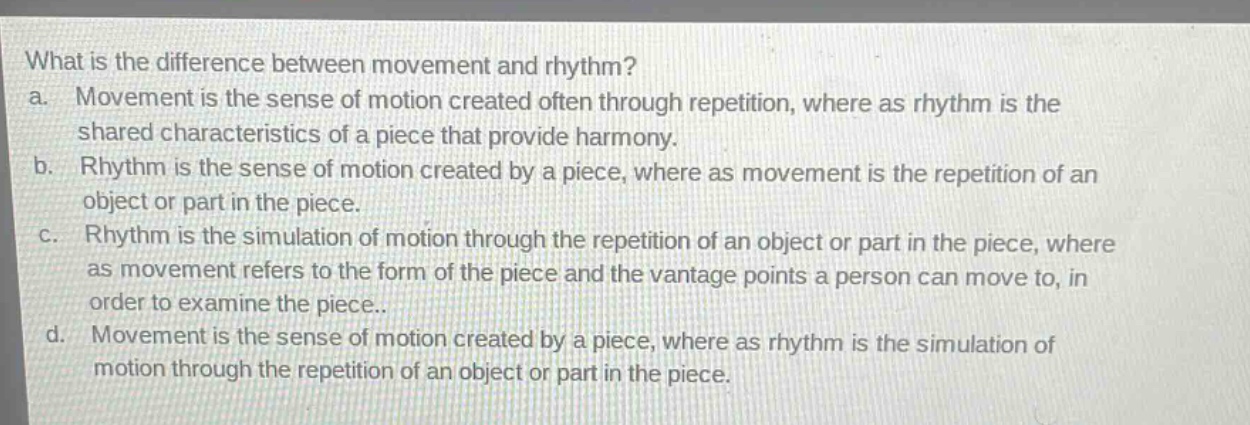
what is the difference between movement and rhythm?\na. movement is the sense of motion created often through repetition, where as rhythm is the shared characteristics of a piece that provide harmony.\nb. rhythm is the sense of motion created by a piece, where as movement is the repetition of an object or part in the piece.\nc. rhythm is the simulation of motion through the repetition of an object or part in the piece, where as movement refers to the form of the piece and the vantage points a person can move to, in order to examine the piece..\nd. movement is the sense of motion created by a piece, where as rhythm is the simulation of motion through the repetition of an object or part in the piece.
Answer
Answer:
D. Movement is the sense of motion created by a piece, where as rhythm is the simulation of motion through the repetition of an object or part in the piece.
Brief Explanations:
- Movement: In art, movement refers to the sense of motion or the visual flow within a piece. It can be created through various elements like lines, shapes, and colors that guide the viewer's eye across the artwork.
- Rhythm: Rhythm in art is similar to rhythm in music. It is created by the repetition of elements (such as shapes, colors, or lines) in a piece. This repetition can create a sense of visual beat or pulse, which is a form of simulated motion.
- Analysis of Options:
- Option A: Incorrect. Harmony is about the pleasing combination of elements, not what rhythm is.
- Option B: Reverses the definitions of movement and rhythm.
- Option C: Movement is not about the form and vantage points.
- Option D: Correctly defines movement as the sense of motion in a piece and rhythm as the simulated motion through repetition.